Product Leadership · UX Research · Leeroy · Loyalty
One loyalty programme that rewards diners wherever they pay, in the app and at the till
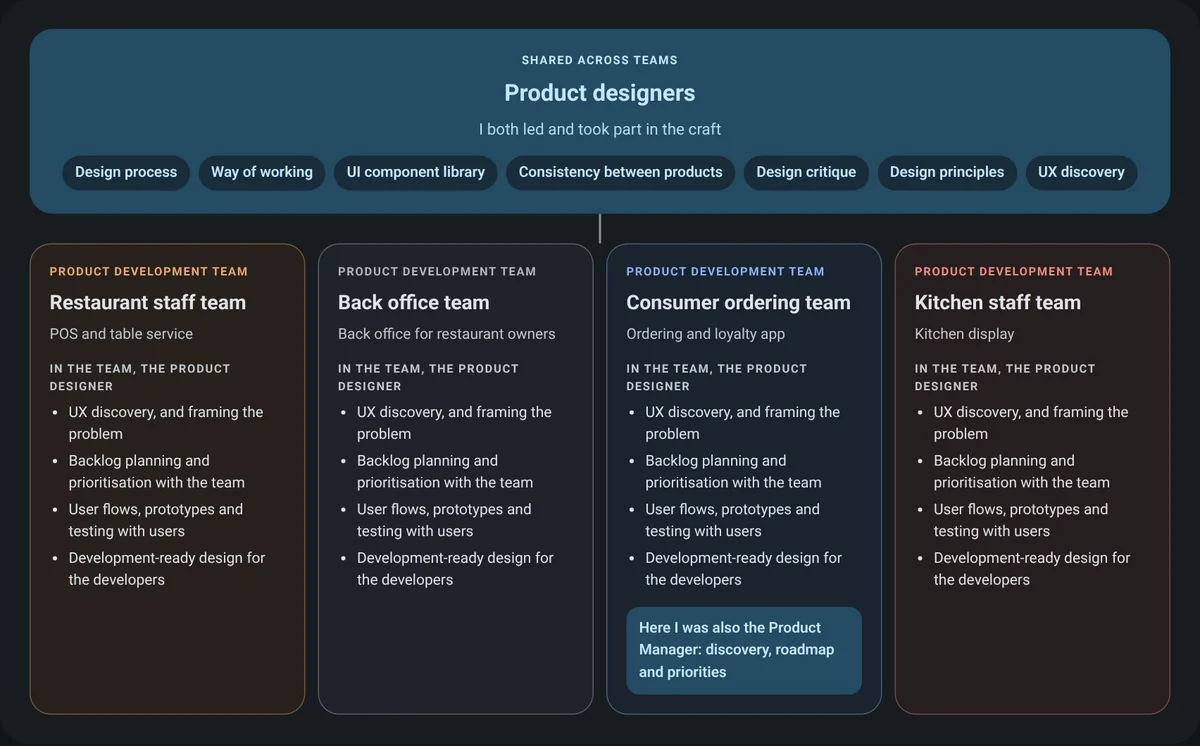
As Product Manager for Leeroy’s ordering and loyalty app, I set out to make loyalty work wherever diners pay. I did most of the research with restaurant brands and diners myself, decided together with our customers on two loyalty programmes, and drove the work from insight to roadmap, including the call to build ordering first and loyalty next, in balance with the business impact our customers needed. My team built the back office where restaurants run their own programme, and the product designer in the team did the design. The loyalty programme increased sales by 39% on average.
- My role
- Product Manager for the white-label ordering and loyalty app: customer, market and user research, and the product roadmap
- Year
- 2017–2021
- Industry
- Restaurant tech, SaaS and fintech
- Company
- Leeroy Group
- Team
- One product designer, and front-end and back-end developers
- How we worked
- No product owners: the product development team owned the backlog together
- Users
- Restaurant owners and staff in the back office, and diners in the app and at the till
- Platform
- A back office for our customers, and a white-label app for iOS and Android
- Tools
- Sketch, Jira, Miro and Google Analytics, and a working prototype in code (2026)
The short version
The problem
Restaurant brands wanted diners to come back and stay loyal to their brand. But points went missing when diners paid at the till instead of in the app. Diners don’t think in channels, and missing points cost their trust.
What I did
As Product Manager, I did most of the customer, market and user research, and decided together with our customers on two loyalty programmes, points and punch cards, so they could create loyal behaviour in different ways. I turned the insights into the product roadmap, and shaped the back office where our customers manage their programme, offers and campaigns. The product designer in the team did the design.
What it led to
Diners came back to the brand. Repeat purchases were closely tied to the loyalty programme, with points or stamps earned and used in the app and at the till, and the programme increased sales by 39% on average.
What I did as Product Manager
- Two loyalty programmes, decided with our customersPoints and punch cards, so the restaurant brands could create loyal behaviour in different ways: rewarding every purchase, or coming back for a favourite product.
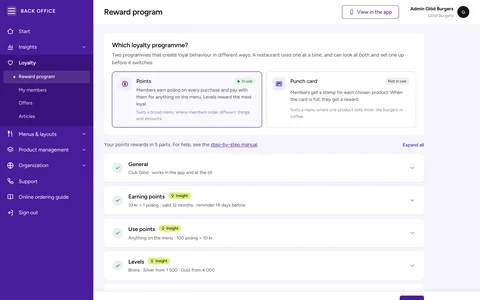
- Customer, market and user researchInterviews and co-labs with restaurant brands, trend research on loyalty in Sweden and abroad, observations in the restaurants and usability tests with diners, on how loyalty programmes should appear in the app and at the till.
- Service and journey mappingFrom paying to earning and coming back, front stage and backstage, to find where loyalty broke and which product had to change.
- A back office our customers manage themselvesWhere restaurants set up and change their loyalty programme, offers and campaigns, without waiting for us. Built by my team.
- One membership everywhereI agreed with the Product Manager for the till that it recognises the member, so points, stamps and rewards work in the app and at the till.
- The product roadmapThemes written from the diner’s point of view, prioritised and tied to the KPIs they should move: active members, repeat purchases, visits per member and rewards used.
The challenge
Restaurant brands wanted diners to come back to their brand, again and again. Leeroy’s white-label app gave them their own ordering and loyalty app. But loyalty broke when the diner paid at the till: points went missing when diners paid there instead of in the app. Diners don’t think in channels, and missing points cost their trust.
The problem we wanted to solve:
- Rewarded wherever they payPoints, stamps and offers work in the app and at the till, in every sales channel.
- Run by the restaurantThe restaurant sets up and changes its own programme in the back office.
- A reason to come backRewards that make diners come back, and brands that stay on the platform.
Customer, market and user research
As Product Manager, I did most of the research myself, and the product designer in the team did the design. It combined four kinds of studies:
- Customer research: interviews and co-labsWith several restaurant brands, to understand their needs and goals together.
- Market research: trendsWhat was happening in loyalty and payments, in Sweden and abroad.
- User research: observations in the restaurantsIn the restaurants, to see how paying and loyalty worked at the till in practice.
- User research: usability testsOf flows and prototypes, to validate solutions with diners before they were built.
Service research: front stage and backstage
I mapped the service from paying to earning and coming back, front stage and backstage: what the diner does, what the staff at the till do, and what the back office and the systems behind them must do. It showed where points went missing, and which product had to change.
- The dinerPays in the app or at the till, earns points, gets rewards and offers, and comes back.
- Staff at the tillScan the member card in the app, and redeem rewards at the till.
- The back office and the systemsCampaigns and loyalty rules set by the owner in the back office, and the loyalty engine behind the app and the till.
What we learned
- Loyalty broke when the diner paid at the tillPoints went missing when diners paid at the till instead of in the app. Diners don’t think in channels, and missing points cost their trust.
- Offers got diners to download the app, loyalty brought them backThe app was downloaded the most when we introduced campaigns and offers in it. Repeat purchases, in turn, were closely tied to the loyalty programme, which we could see when we measured loyalty through purchase card tokens.
From insight to product direction
- Discovery insightPoints went missing when diners paid at the till.
- Design principleOne membership in the app and at the till.
- Design decisionThe membership card in the app, scanned at the till, so points are earned and used in both.
- Product direction“I get rewarded wherever I pay”
- Measuring successActive members · Repeat purchase rate
The product roadmap
The roadmap was built from themes, not features. Each theme was written from the diner’s point of view, as an outcome they would notice, and linked to the KPIs it should move. Loyalty had two themes:
Next · “I get rewarded wherever I pay”
Points and rewards follow the diner, in the app and at the till.
- What it includesBecome a member in the app, earn points in the app, be recognised at the till, and use rewards in both.
- KPIs it should moveActive members · Repeat purchase rate
Later · “I get offers that make me come back”
Stamp cards and offers, set up by each restaurant brand itself.
- What it includesStamp cards, offers in the app, and campaigns set up by the owner.
- KPIs it should moveVisits per member · Reward redemption rate
User needs in balance with business impact
Every theme was weighed on user value, business potential and complexity, and an impact matrix made the trade-offs easy to discuss in the team and with the other product teams. For loyalty, the two sides pointed the same way:
For the diners
Rewarded wherever they pay, in the app and at the till, with points or stamps they can trust and see.
For our customers, the restaurant brands
Diners who come back, more visits per member and higher sales, with a programme they run themselves.
A prioritisation decision: ordering before loyalty
Without orders in the app there are no transactions, and nothing to reward. So the first sprint goals were about ordering, payment and order status, and loyalty followed in the next phase, so that members come back and brands have a reason to stay.
Dependencies
- Points when paying at the tillThe till recognises the member. Owned by another product team, so I agreed it with their Product Manager and it was planned in their roadmap too.
- Points or stamps, and rewardsThe loyalty programme, set up by our customers in the back office. Built by my team.
- Campaigns and offers in the appSet up by our customers in the back office. Built by my team.
The set-up, step by step
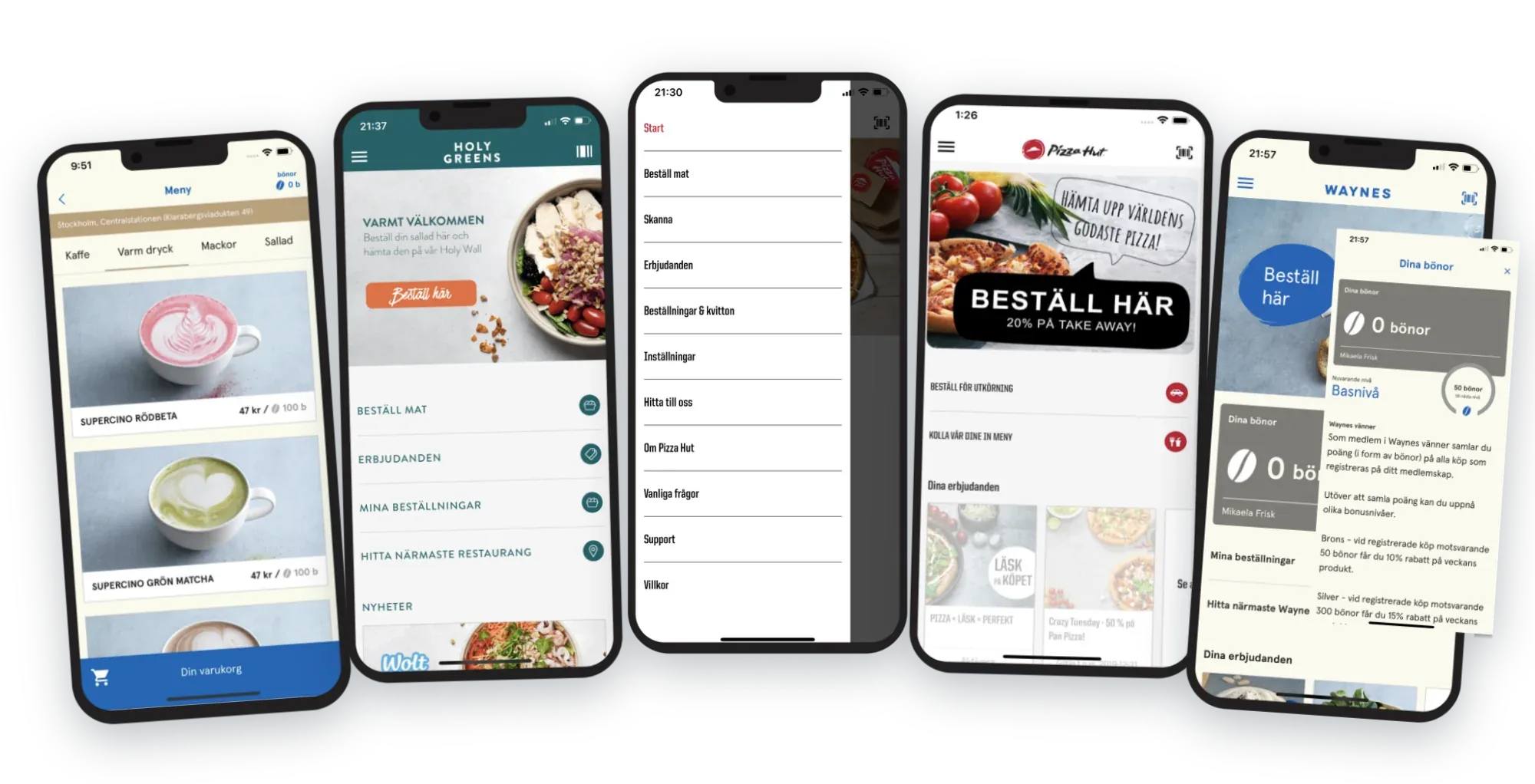
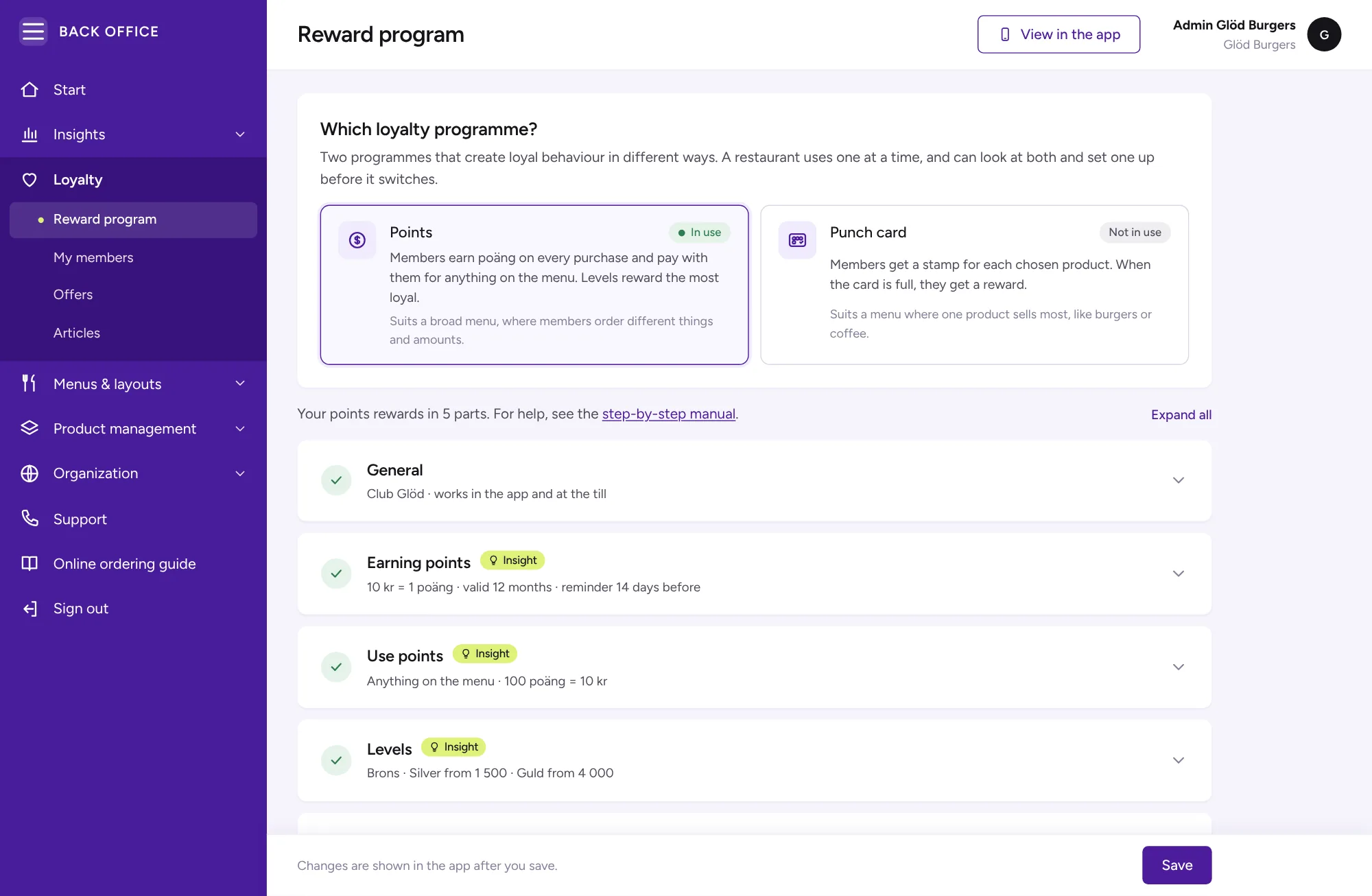
Our customers set up their loyalty programme in the back office. The company no longer exists and the original design is gone, so I rebuilt the set-up as a working prototype in 2026, from the research and the product decisions, with a made-up restaurant. Some details are how I would shape it today. Click a screen to enlarge it.
Working prototypeTry it yourselfSet up a reward programme as the restaurant would: points or punch cards, offers and promo codes. Then see how it looked in the app.1 · Points or punch cards
2 · Earning points
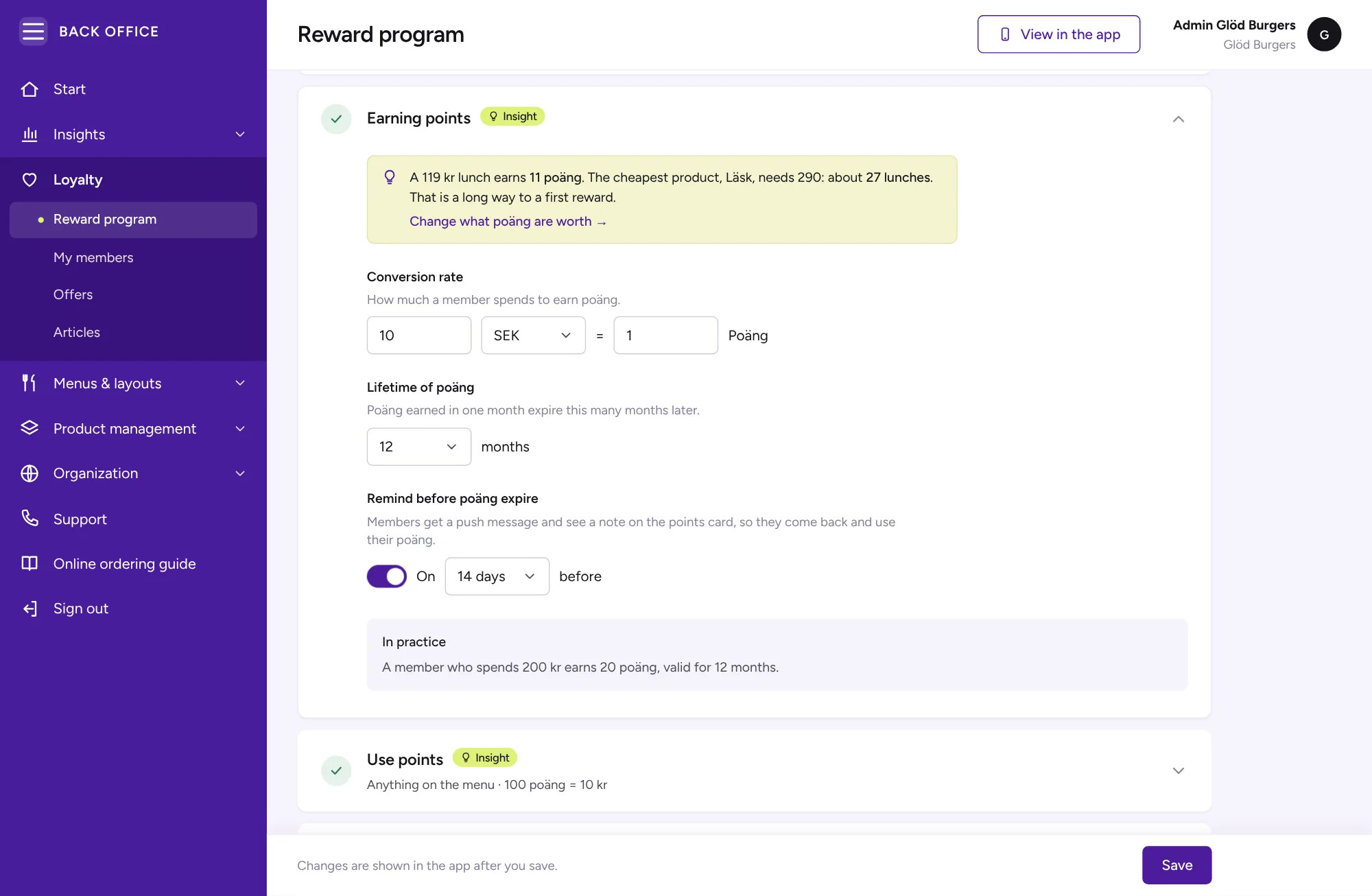
3 · Using points
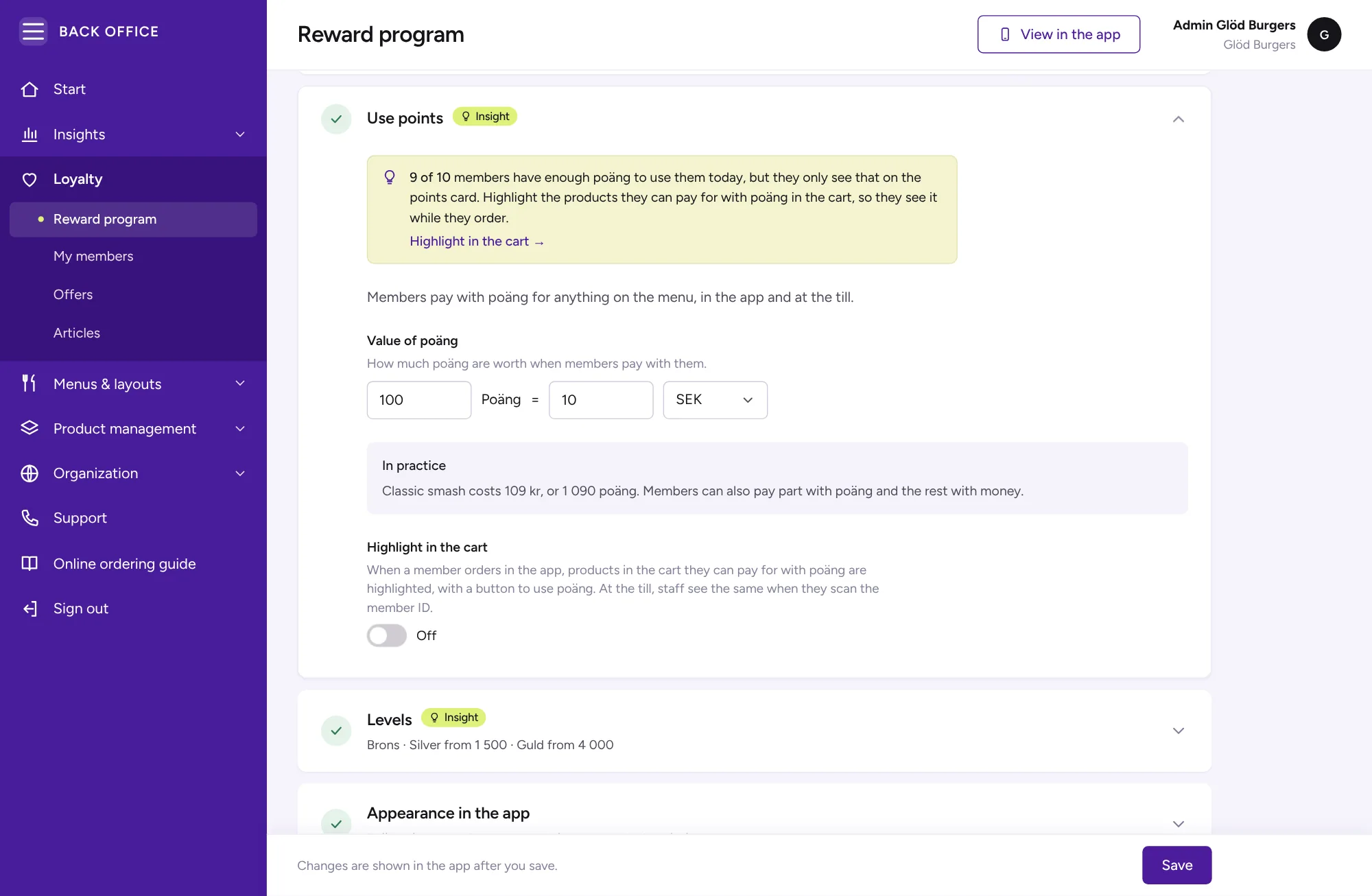
4 · Levels
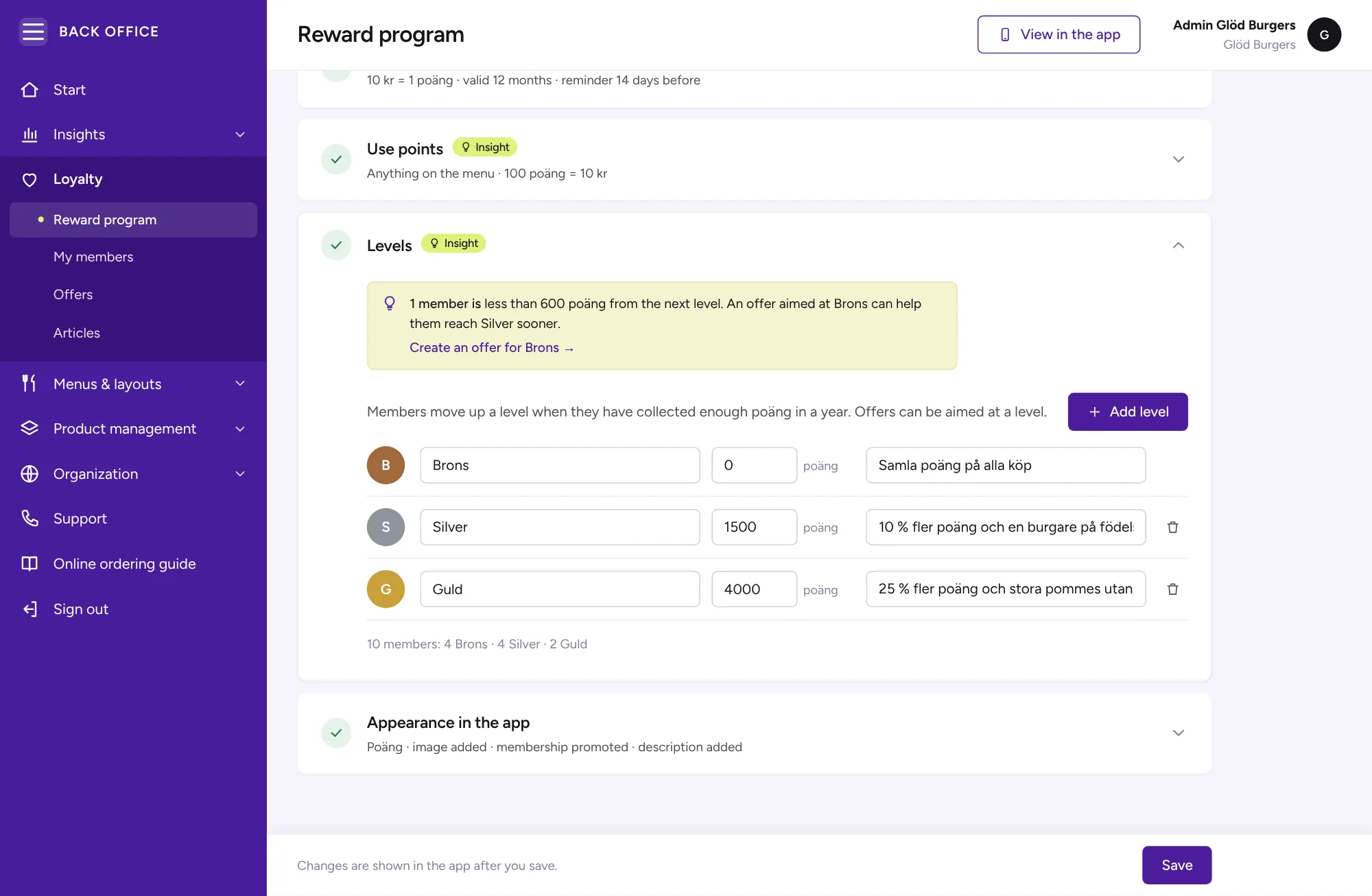
5 · Punch cards
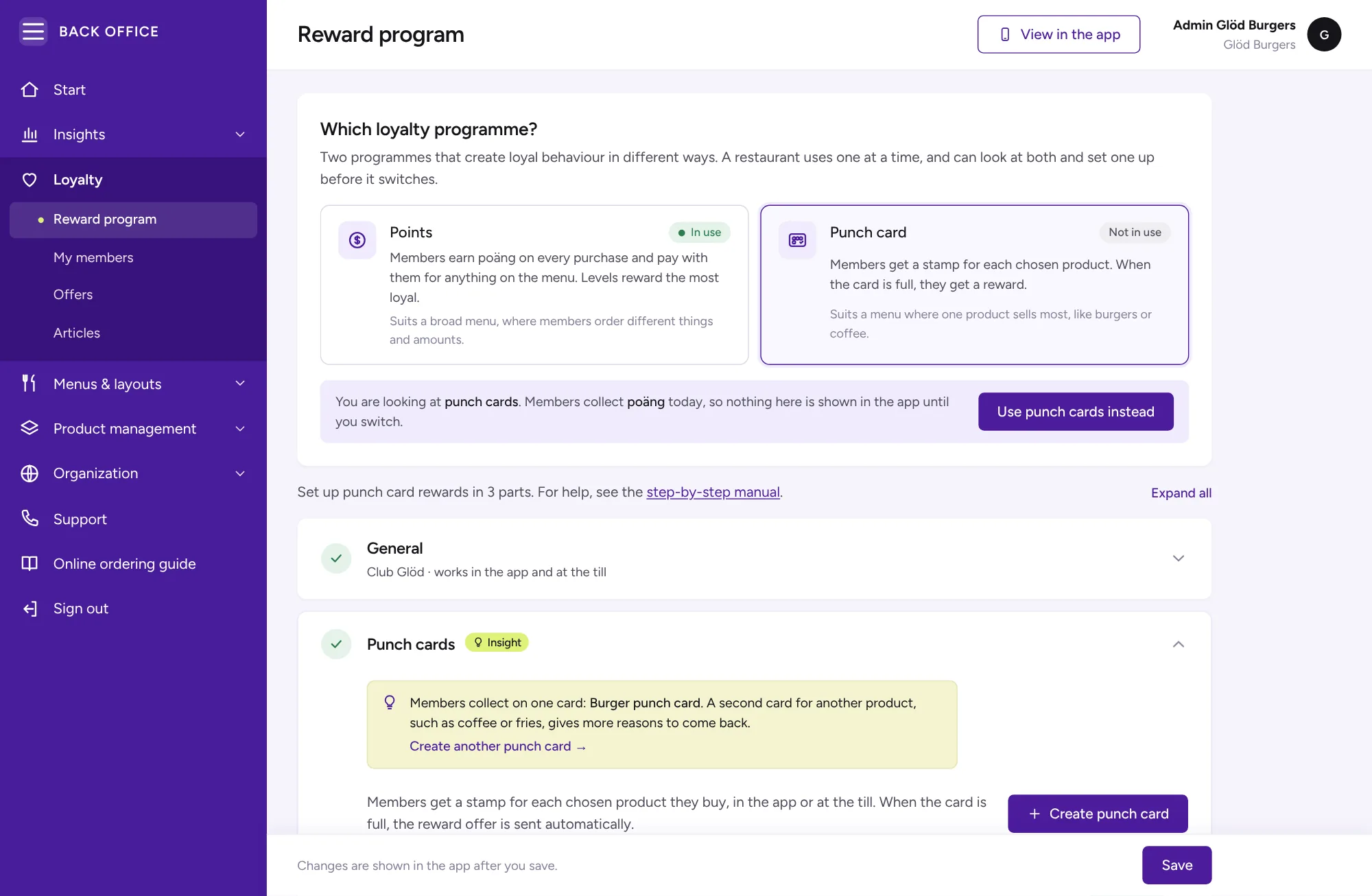
6 · Offers
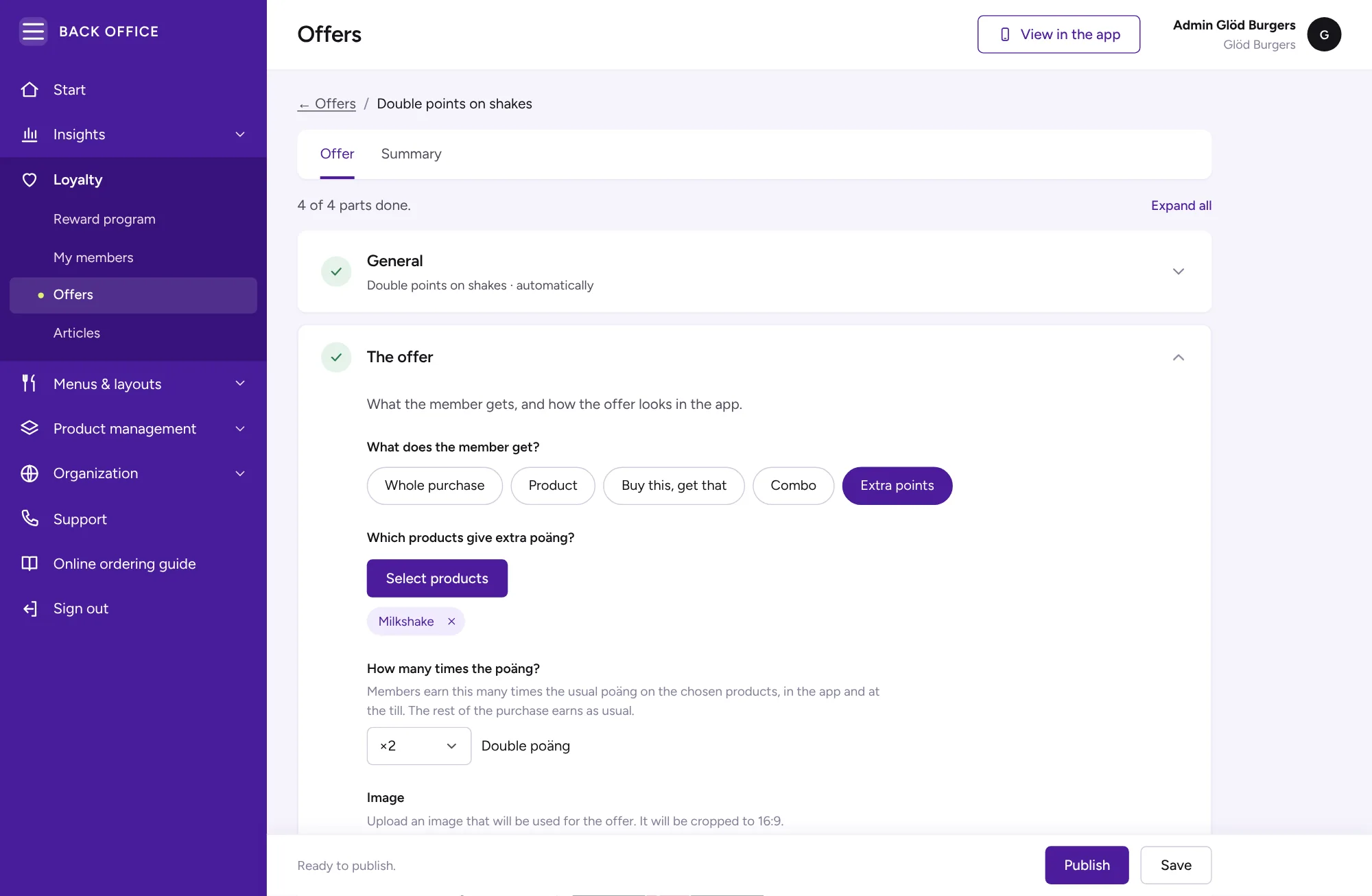
7 · Promo codes
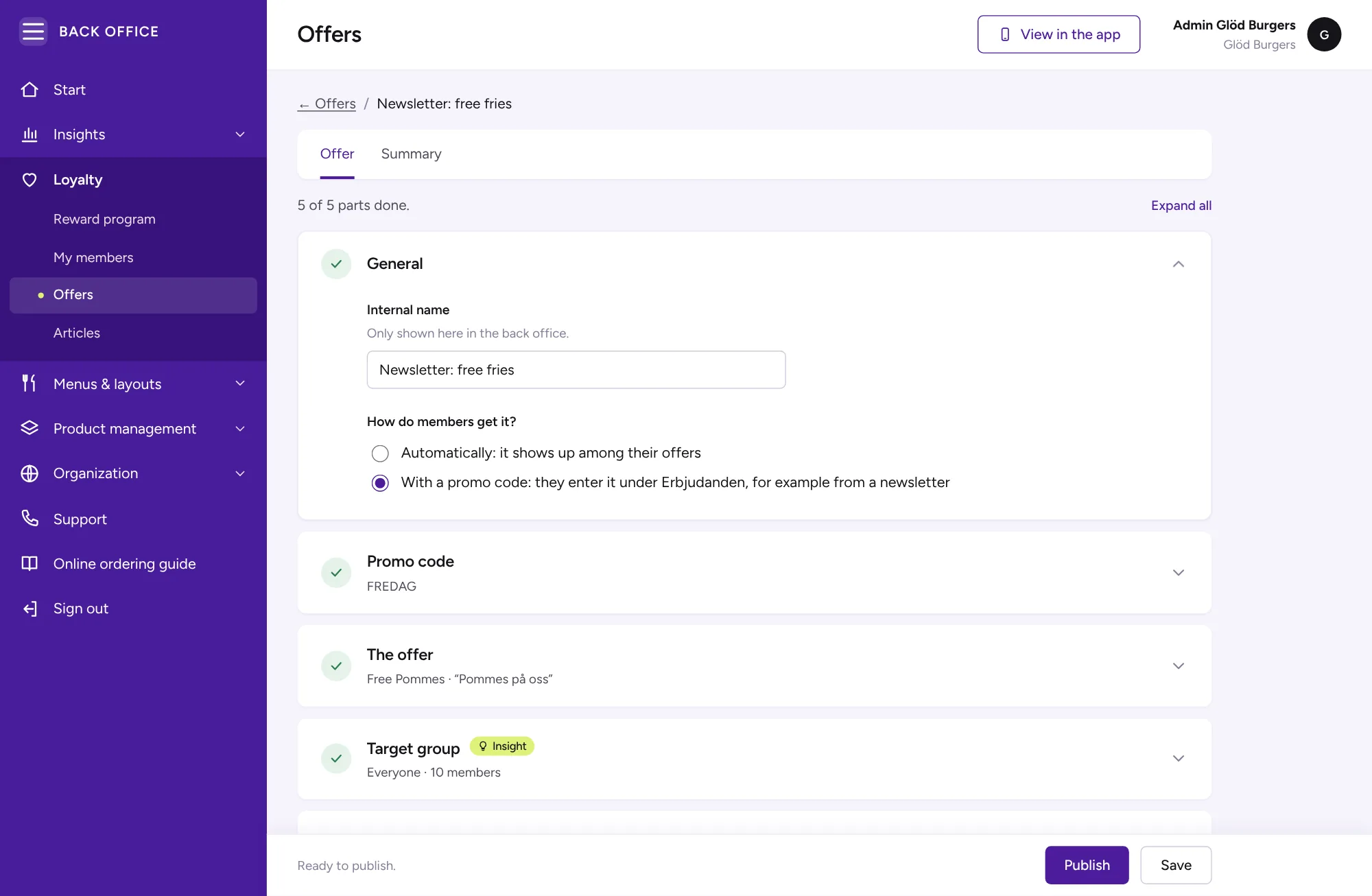
8 · Members
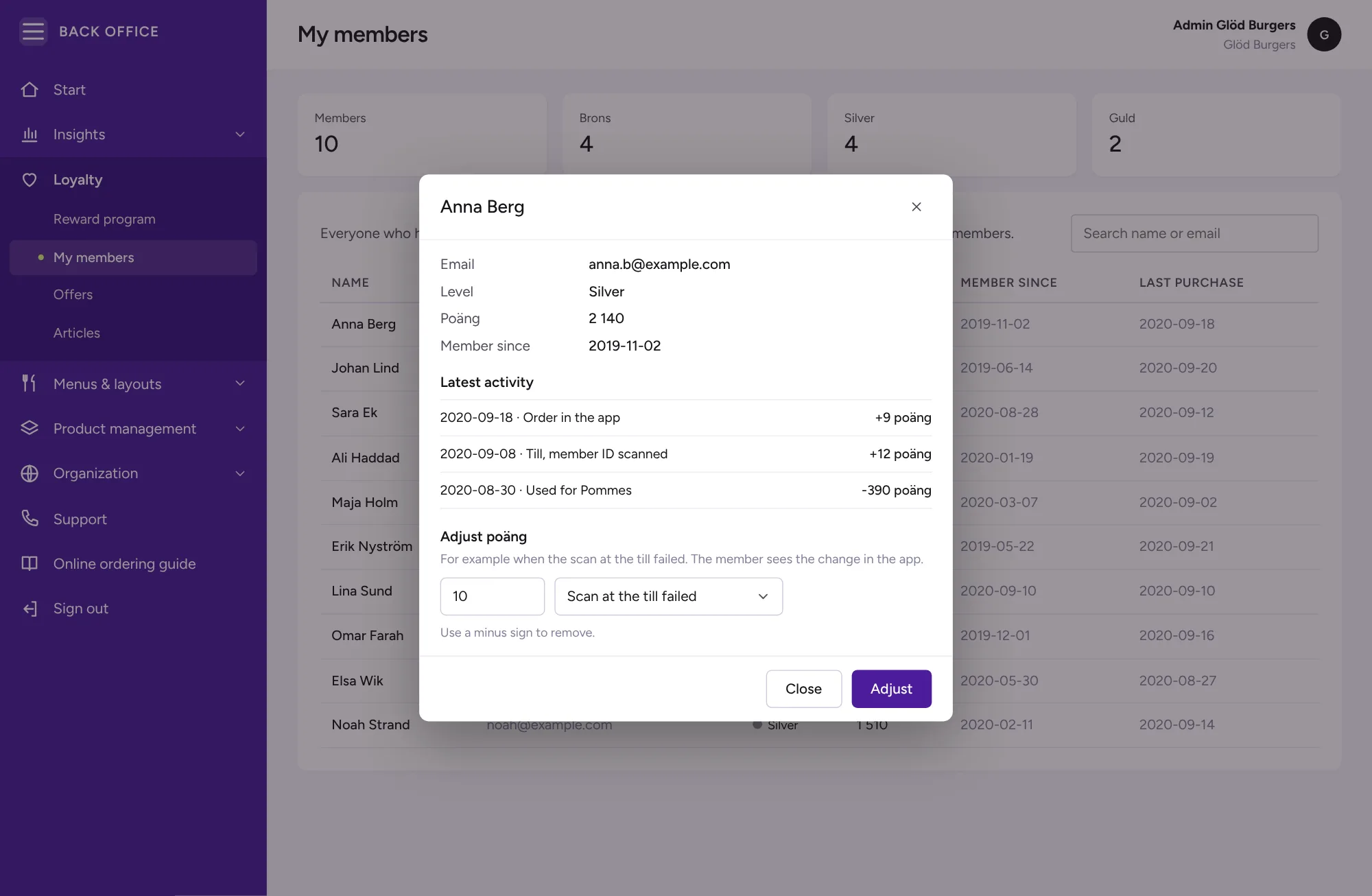
In the app and at the till
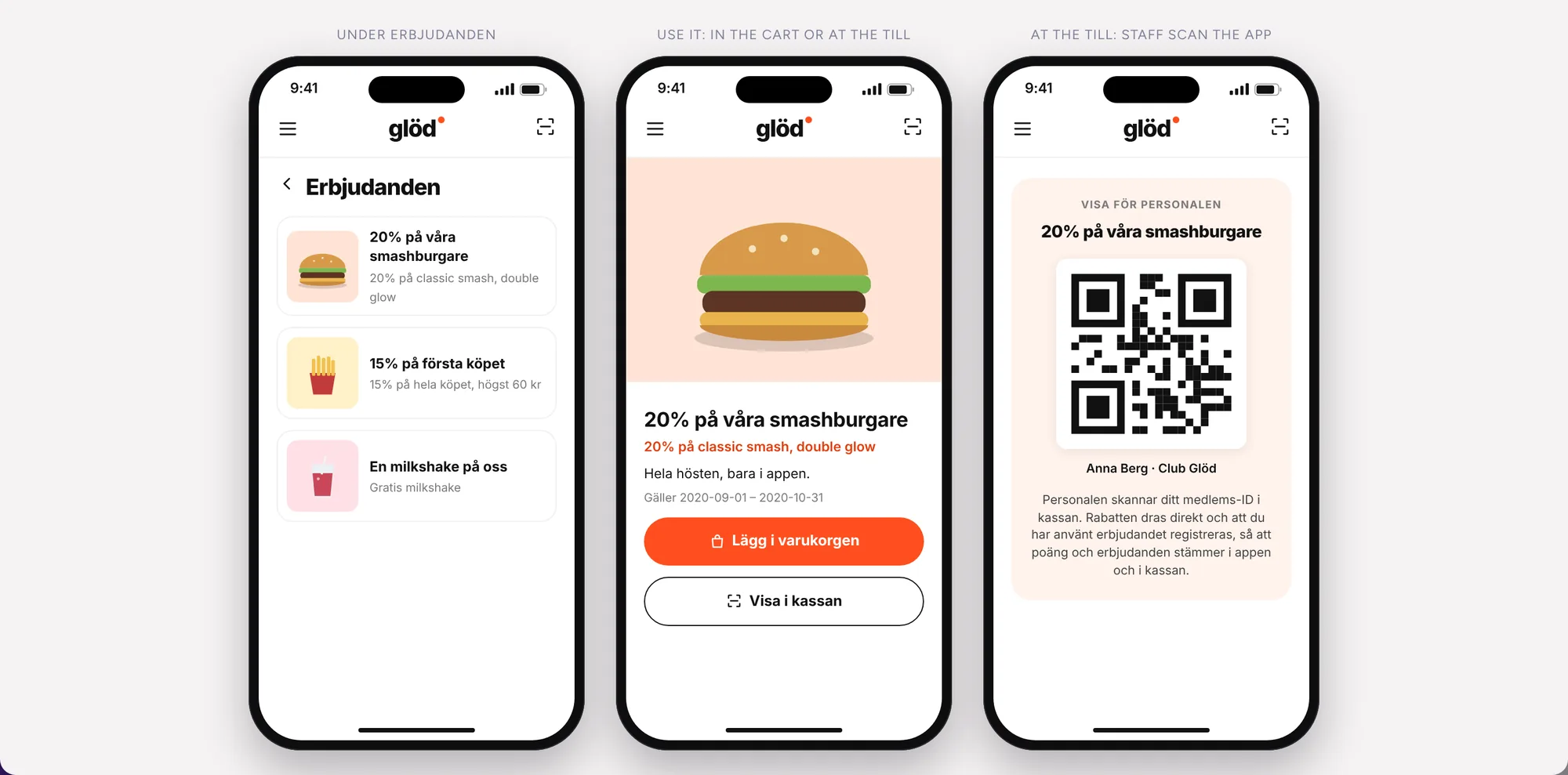
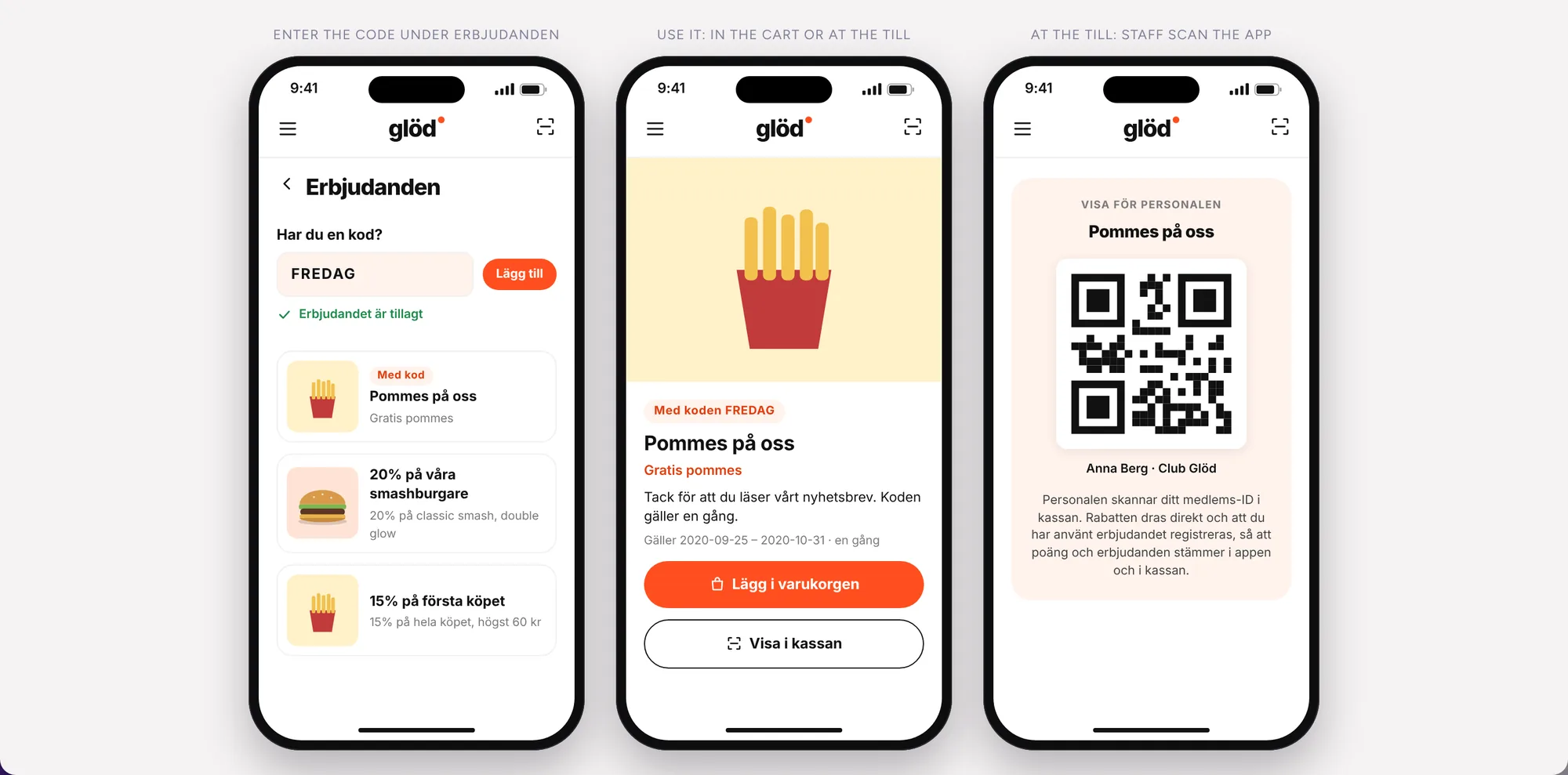
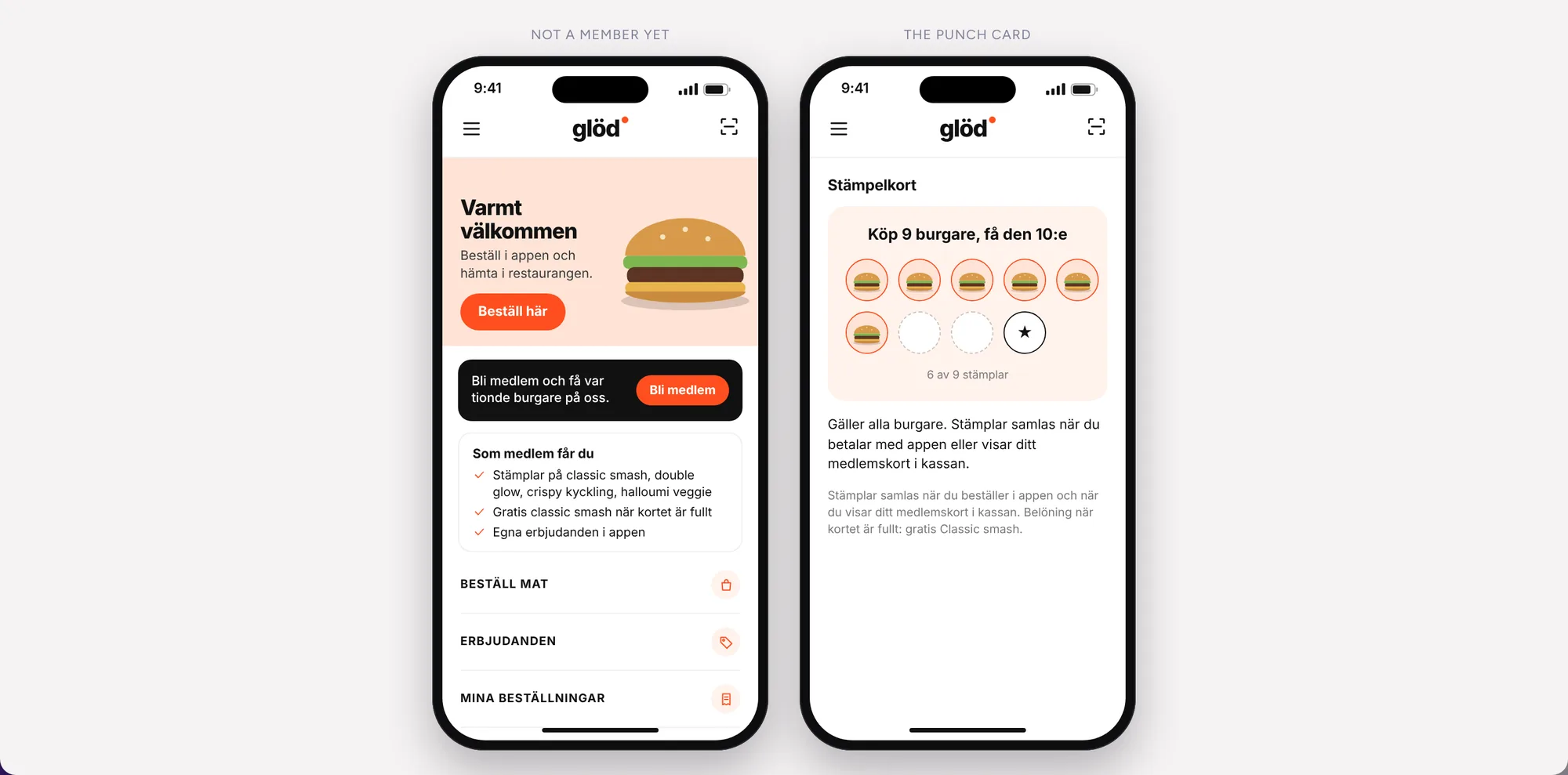
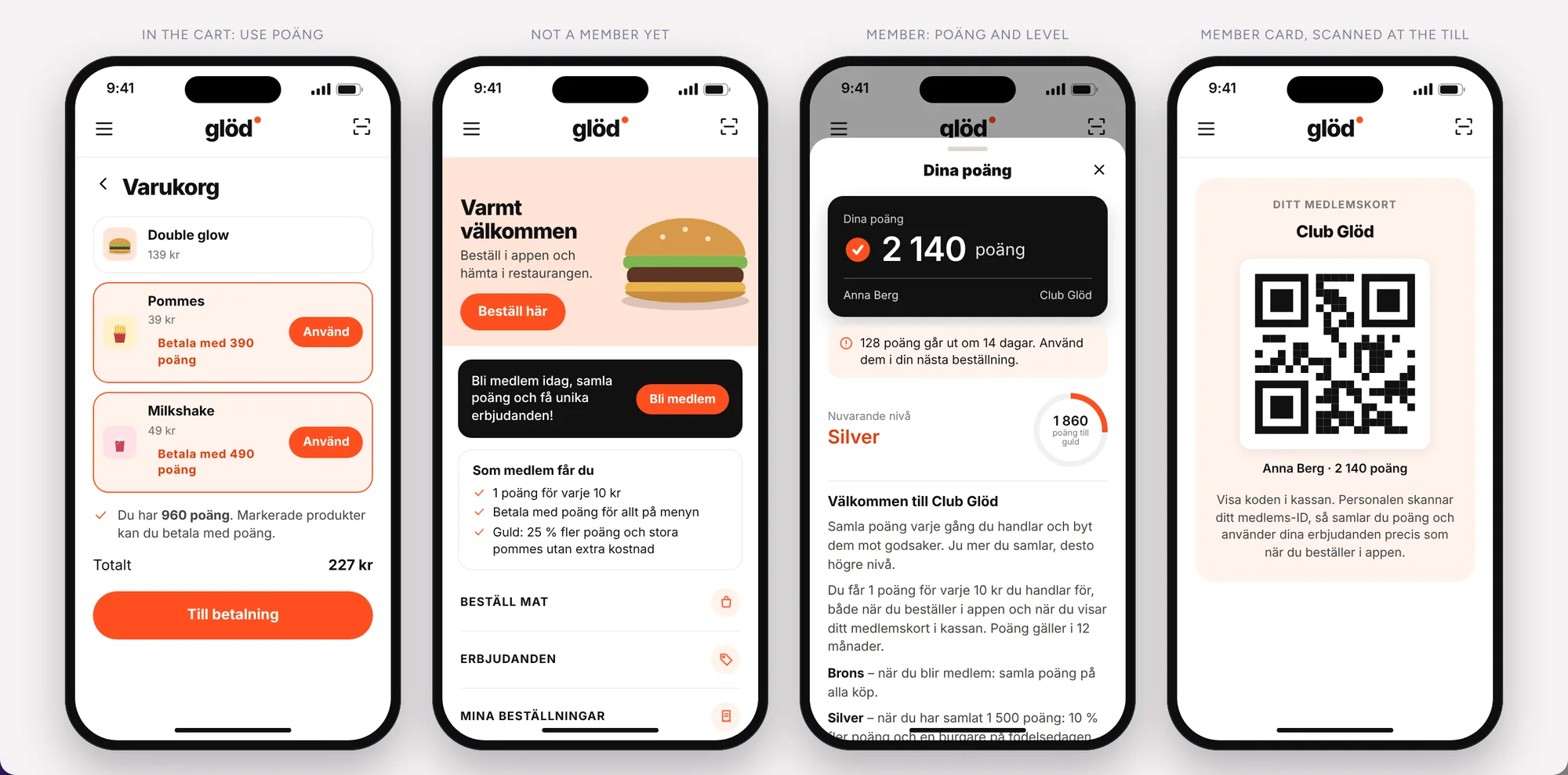
For diners, it was one white-label app, released with each brand’s own look. Everything worked both when ordering in the app and at the till, where staff scan the member ID. The screens are recreated for this case, with a made-up brand.
1 · Points and level
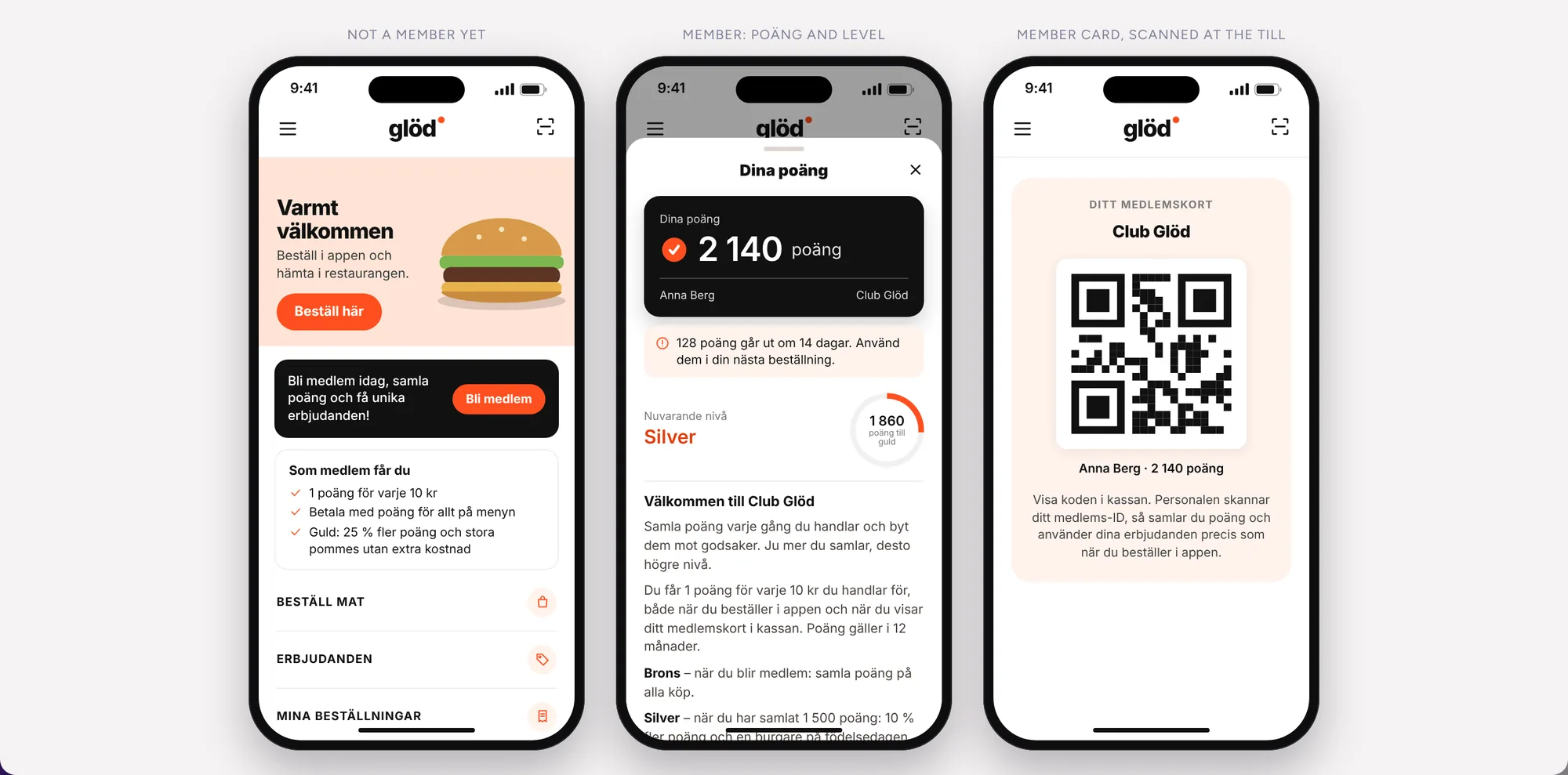
2 · Offers in the cart or at the till
3 · Promo codes under Erbjudanden
4 · The punch card
5 · Using points in the cart
Product decisions
One membership in the app and at the till
The membership card is in the app and scanned at the till, so points are earned and used in both.
Every sales touchpoint
Points, stamps and offers work when ordering in the app and at the till. If loyalty fails in one channel, diners stop trusting it in all of them.
Offers to start, loyalty to come back
Offers got diners to download the app, and the loyalty programme brought them back. Both were set up by the restaurant itself.
Two loyalty programmes
Points and punch cards create loyal behaviour in different ways, so each restaurant brand could choose what fits it. A restaurant uses one at a time, so it stays simple for the diners.
The restaurant runs it
Our customers manage the programme, offers and campaigns themselves in the back office, without waiting for us.
Measuring success
Loyalty was tied to the KPIs it should move, each with a target:
- Active members: 40%The share of members who order at least once a month.
- Repeat purchase rate: 50%The share of diners who order again within 30 days.
- Visits per member: 3Visits per active member and month.
- Reward redemption rate: 25%The share of earned rewards that are used.
The result: the loyalty programme increased sales by 39% on average.
What I took with me
Loyalty has to follow the diner, not the channel
Diners don’t think in channels. If points went missing when they paid at the till, they lost trust in the whole programme. Designing loyalty for wherever the diner pays, in the app and at the till, was harder and depended on more teams, but it was what turned diners into regulars.
Write the roadmap in the user’s words from day one
Writing the themes as something the diner would say, like “I know when my food is ready”, changed the conversations. Instead of debating features, we talked about what the diner should notice and why it mattered. When priorities shifted, we moved whole themes instead of reshuffling single features. Next time, I’d start with themes from day one, not move to them along the way.
Agree on the KPIs before the work starts
Linking each theme to the KPIs it should move made priorities concrete. The bigger learning is about timing. If we agree on the KPIs, and know where they stand today, before a theme starts, we can say afterwards whether it worked. Measuring only after launch shows what happened, but not why.
“I worked closely with Mikaela for several years. What impressed me most was her ability to lead product discovery, turn customer and user insights into product direction, and drive product development through her leadership of the design team — always with contagious passion and drive!”