A new service · UX/UI Design · Research · TRR
A new way for companies to find candidates at TRR, where the match is right for both sides from the start
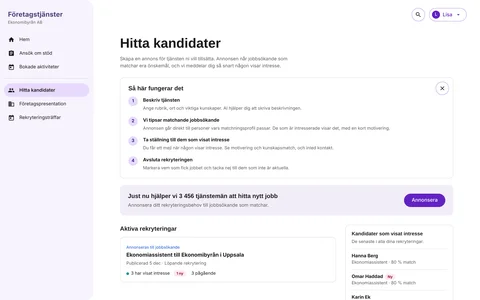
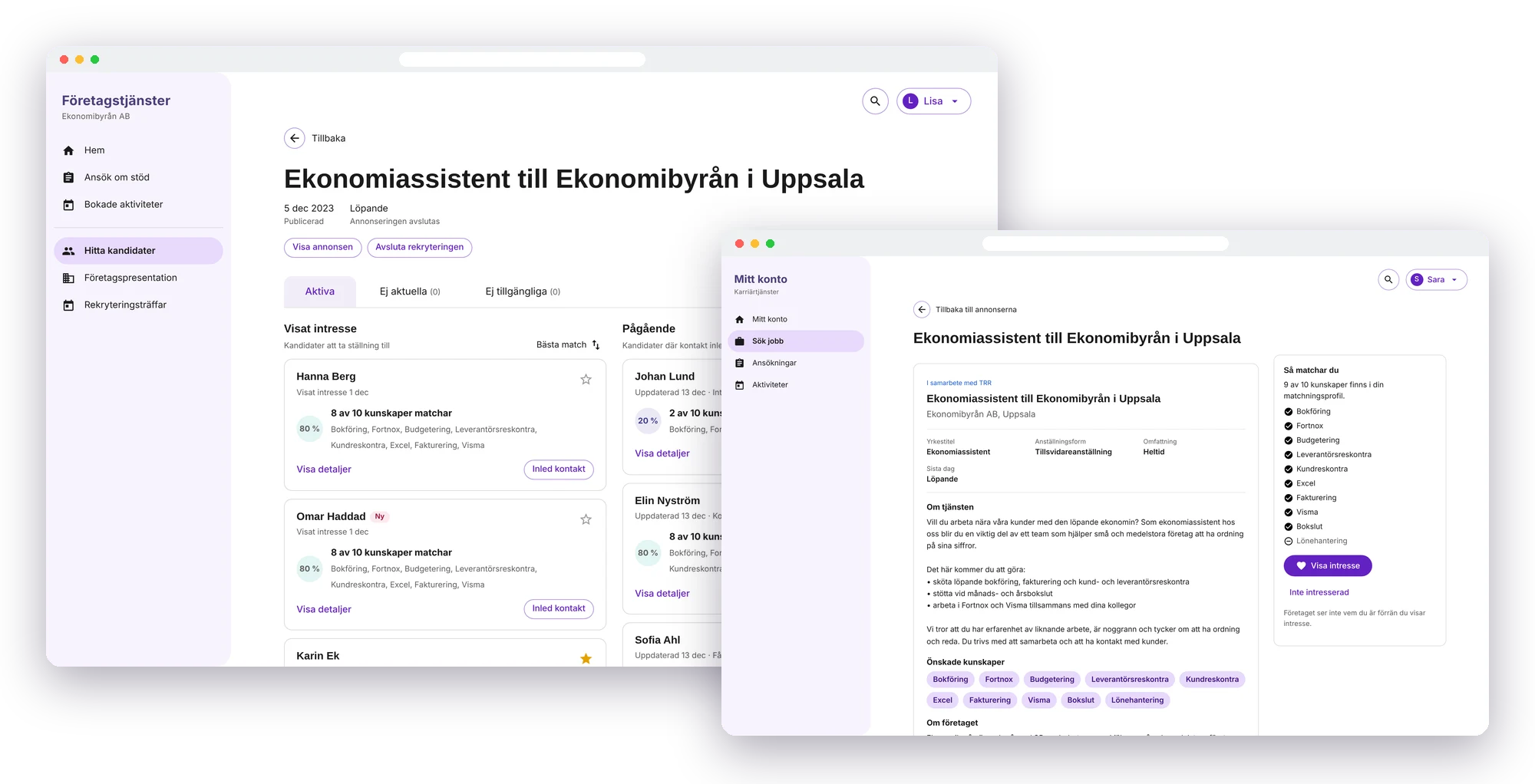
Companies with a hiring need used to call TRR, and an advisor sent them a list of candidates to contact. It worked, but it took time to make sure the people on the list were interested in the role. I took a new, self-service way for companies from early discovery to the final UI: the company describes the need, job seekers whose match profile fits see the role among their matched jobs, and the company meets the ones who said they are interested. A totally new service for TRR, built on the people TRR helps choosing for themselves.
- My role
- UX designer from discovery to final UI, and facilitator of the story mapping
- Years
- 2023–2024
- Users
- Companies with hiring needs, and the job seekers TRR helps
- Company
- TRR
- Method
- Interviews with 30 companies, concept tests with companies and job seekers, story mapping with the team
- Status
- Launched
- Tools
- Figma
The short version
The question
How can companies with a hiring need find the right candidates among the people TRR helps, more on their own?
What we made
A new service: the company describes the need, matching job seekers see the role among their matched jobs, and the company meets the ones who showed interest.
What we learned
Companies saw real potential in the service, but after launch they often forgot to use it when they had a hiring need.
Where we started
When a company had a hiring need, it called TRR. An advisor searched among the people TRR helps and sent the company a list of candidates to contact. That has led to many jobs, and we wanted to keep it.
But it took time, for the advisor and for the company. Before a candidate was presented, someone had to make sure that person was actually interested in the role.
The research question
How can we make it more self-service for companies with hiring needs to find the right candidates among the people TRR helps?
How I worked
I followed the work from the first interviews to the final UI, in the design process we used: discover, define, test the concept, learn, scope, develop, build and measure. I also ran the story mapping sessions where the team decided what to build first.
- DiscoverInterviews with 30 companies
- DefineNeeds, problem and opportunities
- Test the conceptWith companies and job seekers
- LearnWhat to keep, change and drop
- ScopeStory mapping: first and next
- DevelopFinal UI, development-ready
- BuildShipped by the team
- MeasureHow it was used after launch
Discover and define
30 interviews with companies
We interviewed 30 companies in the target group about how they find the right candidates for a job. From the interviews we framed their needs and the opportunities for TRR.
From searching to interest first
The first idea was simple: let companies search among the candidates themselves and contact them. But we wanted the match to be right from the start, on the company’s terms and on the terms of the people TRR helps.
So the company doesn’t search through people. It describes the need, and the people whose match profile fits decide for themselves whether they are interested. The company only sees who they are once they have said yes.
The core idea
Interest first. The company gets fewer, warmer candidates, and the job seeker stays in control of who sees them.
The customer journey, from both sides
The customer journey from both sides: the company with a hiring need, and the job seeker TRR helps. Steps 2 to 8 are the service I designed.
- CompanyHas a hiring needToday: a call to TRR. Now also: describe it in the service.
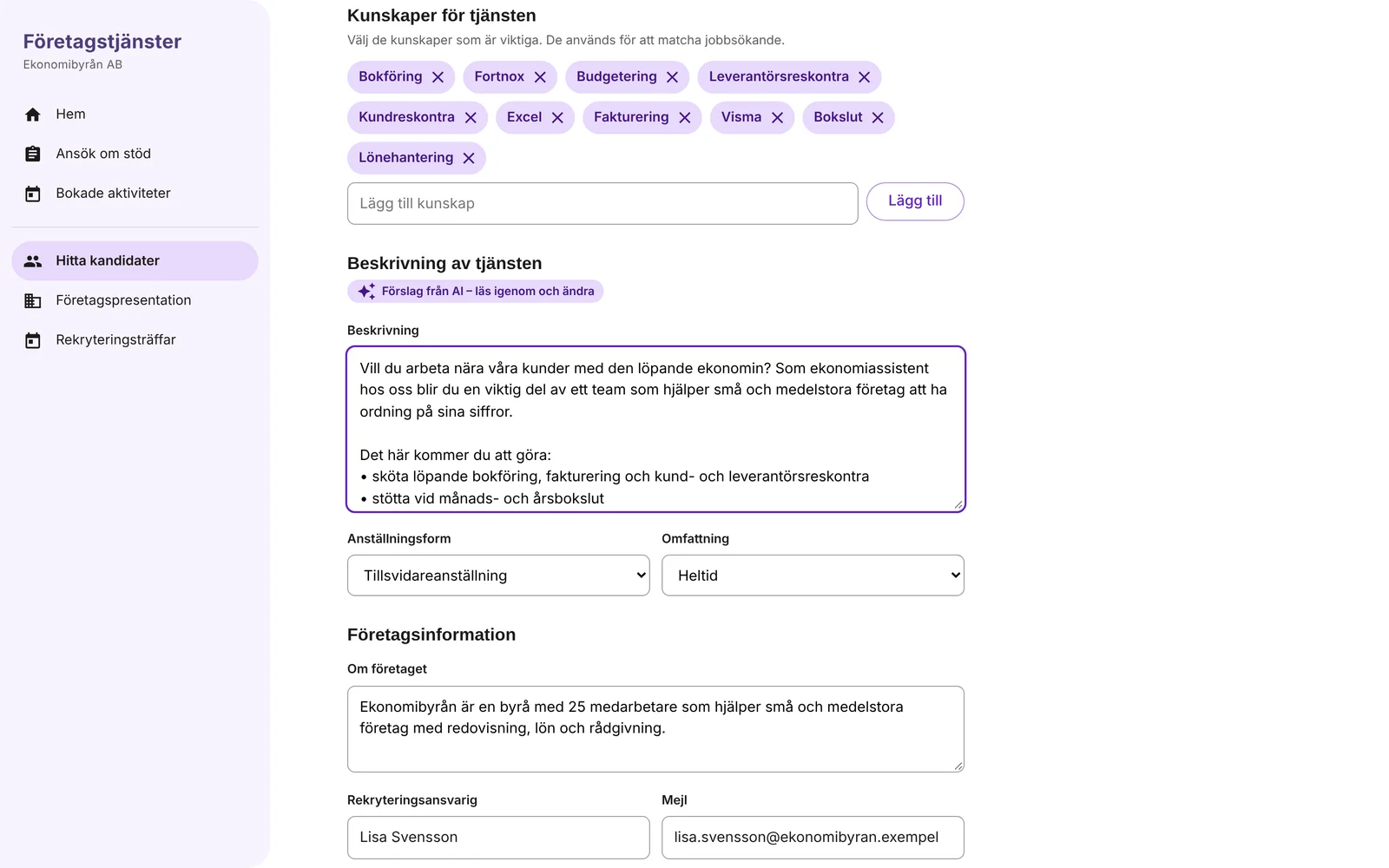
- CompanyDescribes the needTitle, place and skills. AI drafts the description.
- The serviceFinds matching profilesShows how many match before anything is published.
- Job seekerFinds the roleIn Hitta jobbannonser and Matchade jobb, marked “I samarbete med TRR”.
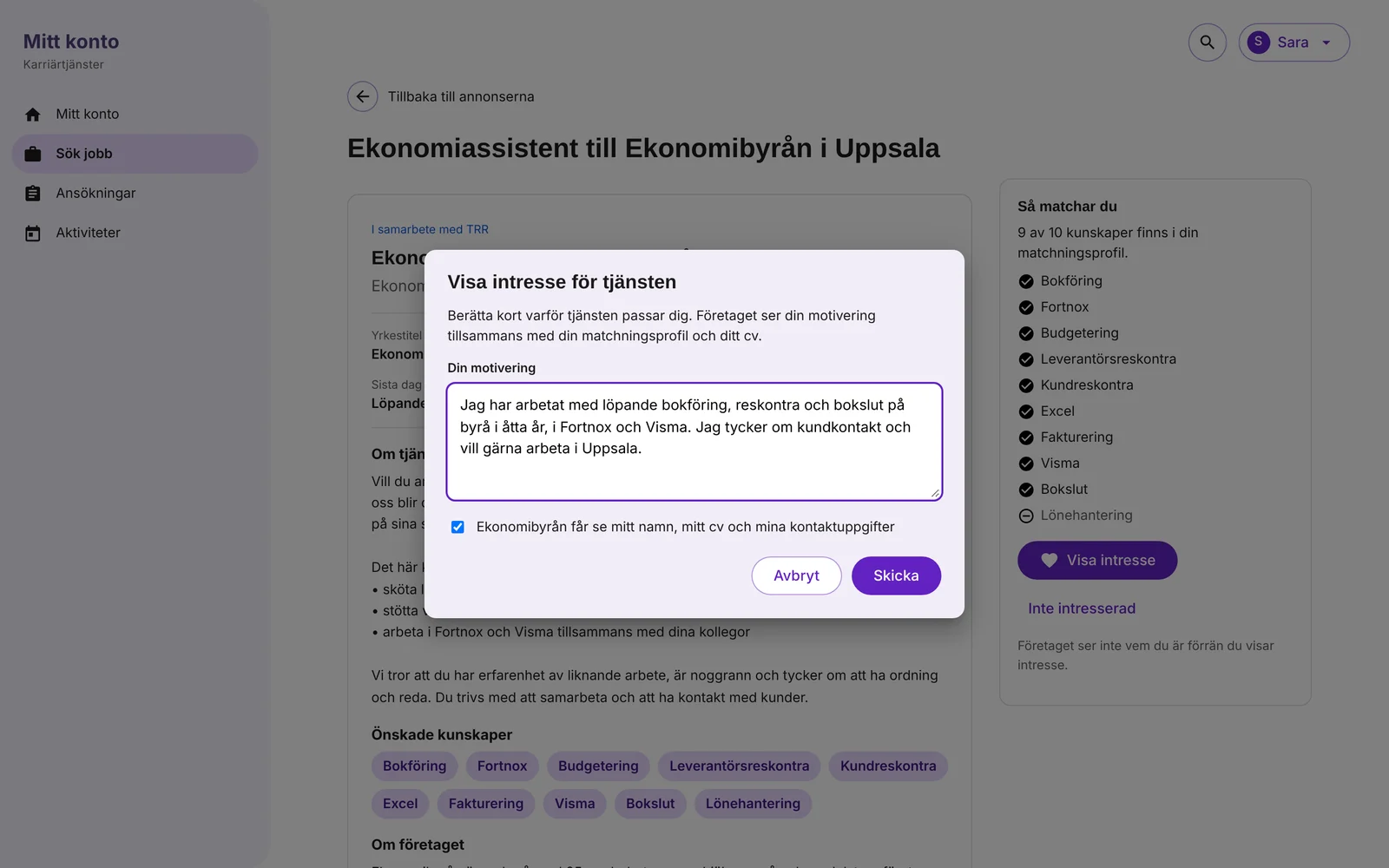
- Job seekerShows interestSends an initial interest for the job, right on the ad.
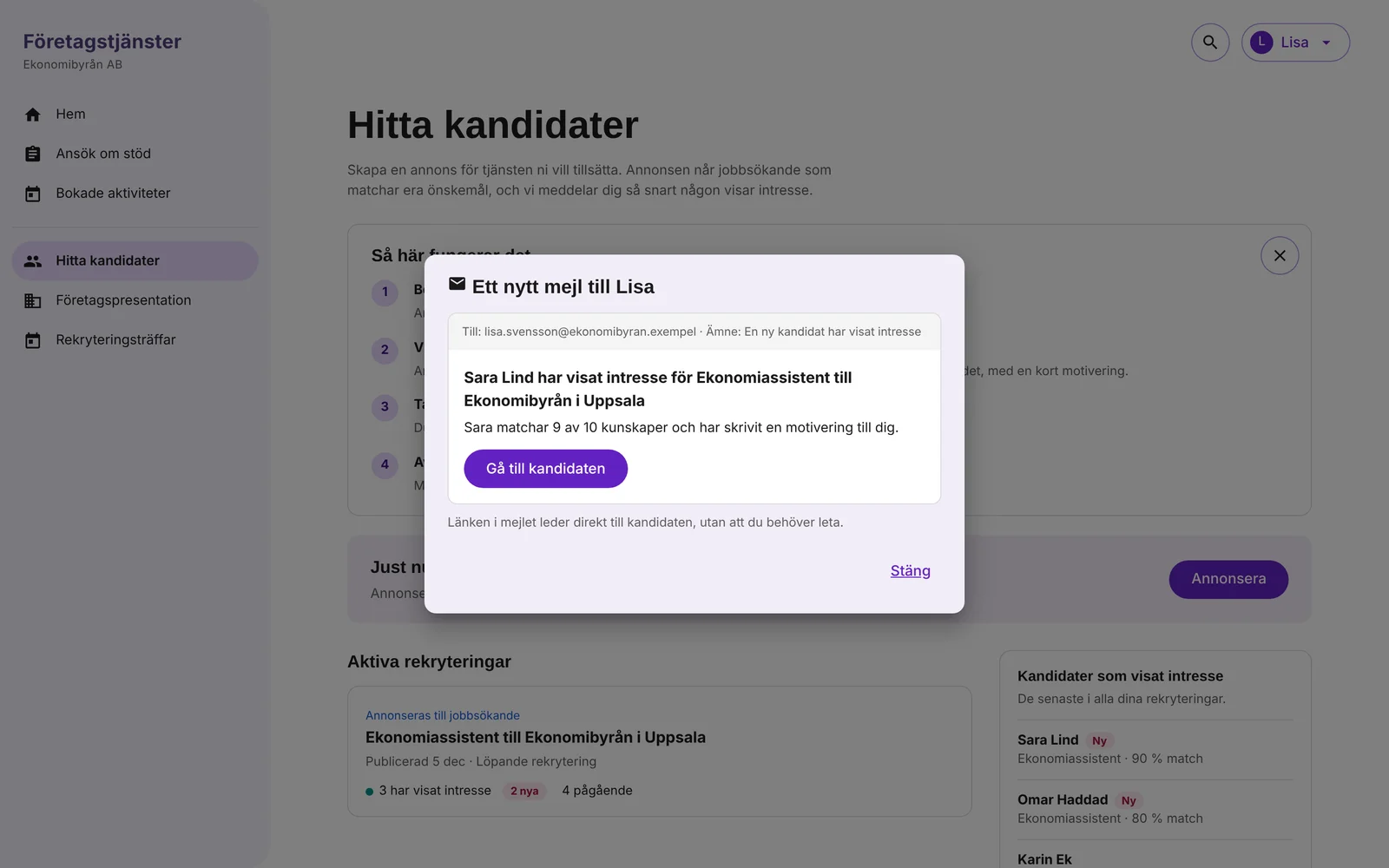
- The serviceEmails the companyA direct link to the new candidate.
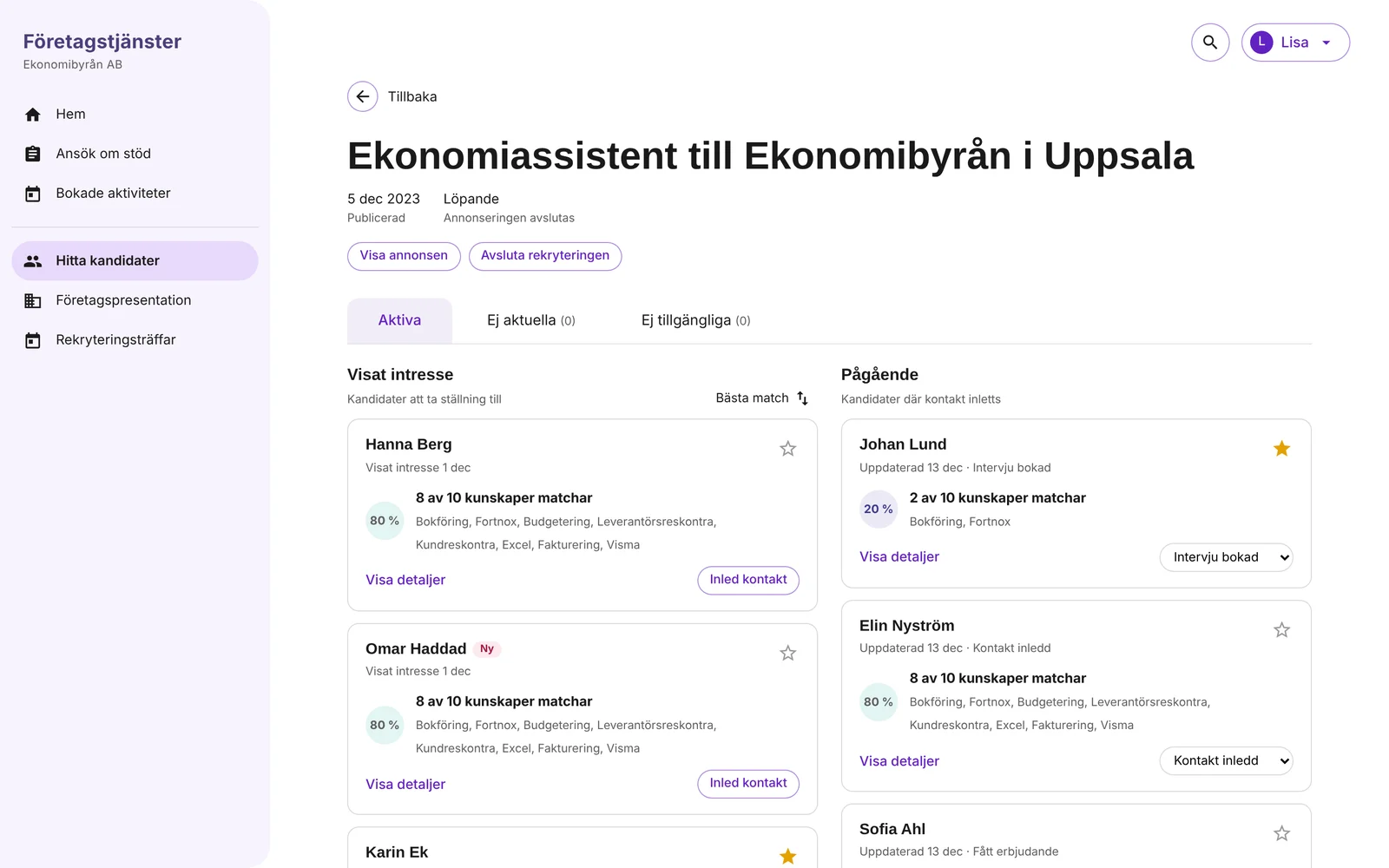
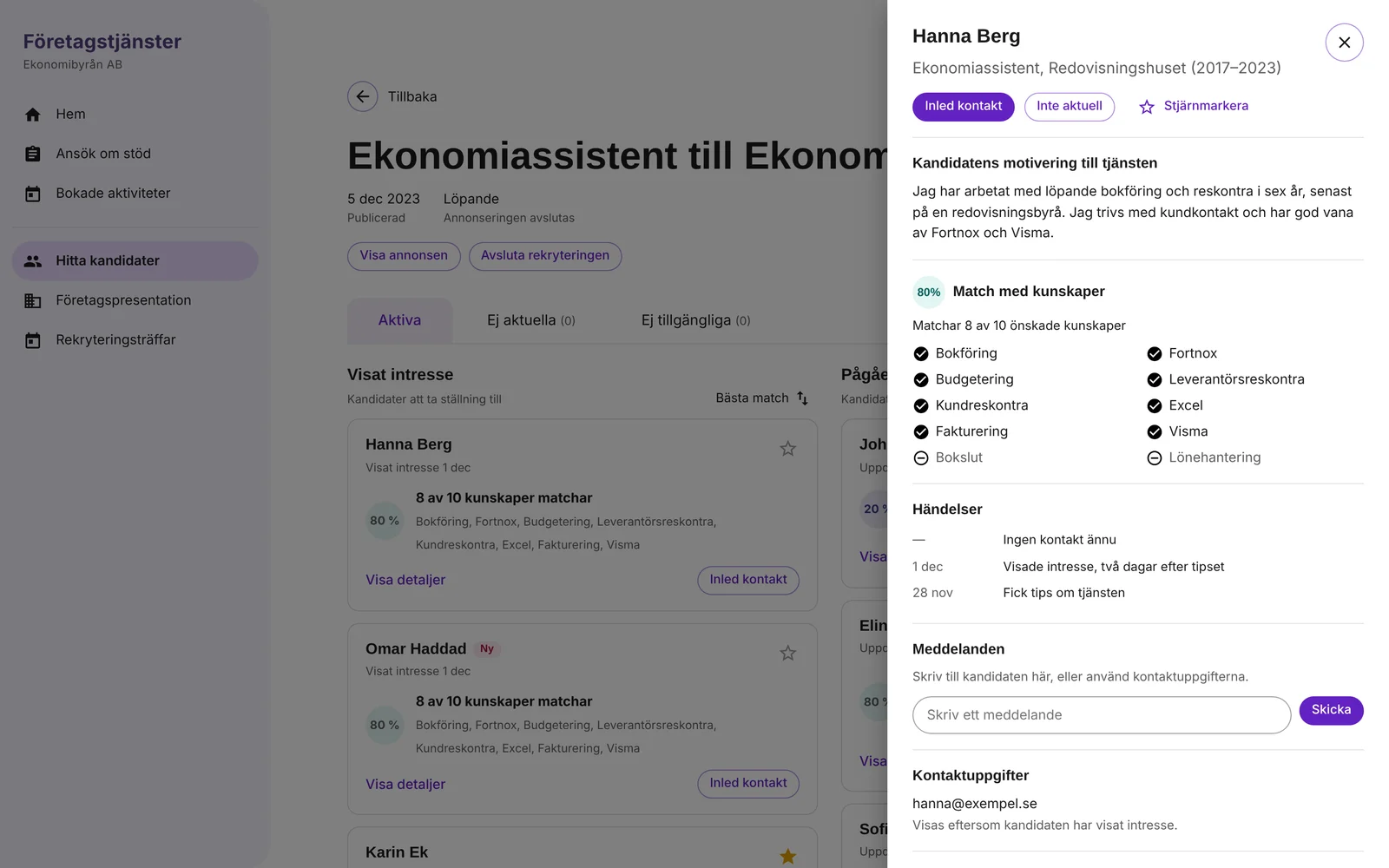
- CompanyReviews and makes contactLogs in, sees who is interested and gets in touch.
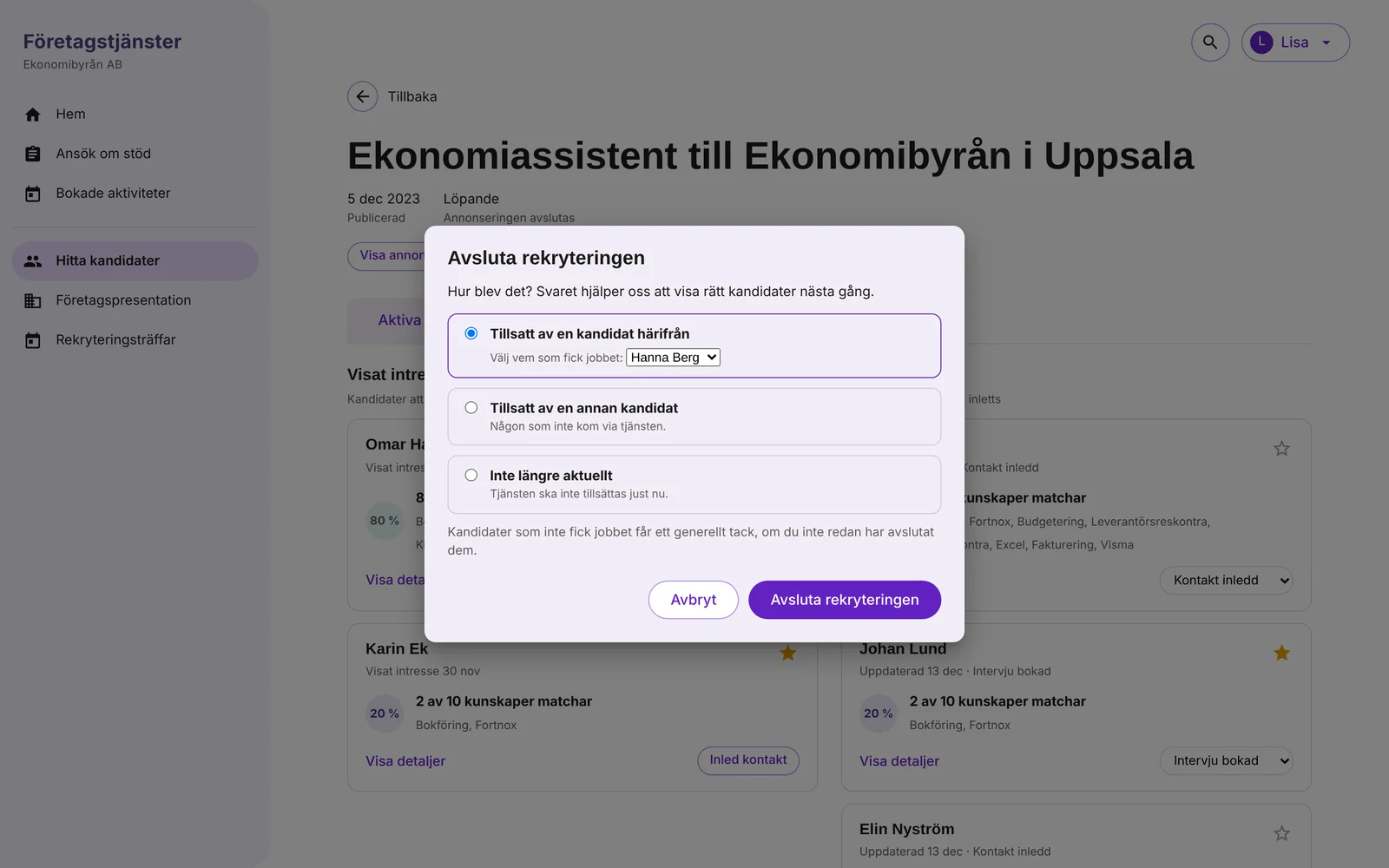
- CompanyCloses the recruitmentWho got the job, and a thank-you to the others.
- Job seekerInterview, and a new jobTalks to the company and, hopefully, gets the job.
The service I designedOutside the flow I designed
Test the concept, and learn
We turned the concept into a prototype and tested it with recruiters at companies and with job seekers. These were the questions we wanted answered:
- Is it easy to reach relevant candidates at TRR with a hiring need?
- How useful are email notifications, and the information about someone who showed interest?
- How do recruiters want to talk to candidates, and to the ones who are not right for the role?
- When do they want to move the dialogue into their own recruitment system?
AI text saved time
A suggested description from a few keywords felt fast and new, as long as it was easy to change.
Interested candidates first
Starting with people who had already said they were interested was what recruiters valued most.
An email that leads straight there
Recruiters use many systems. A notification with a direct link to the candidate made it easy to come back.
Motivation and skill match decide
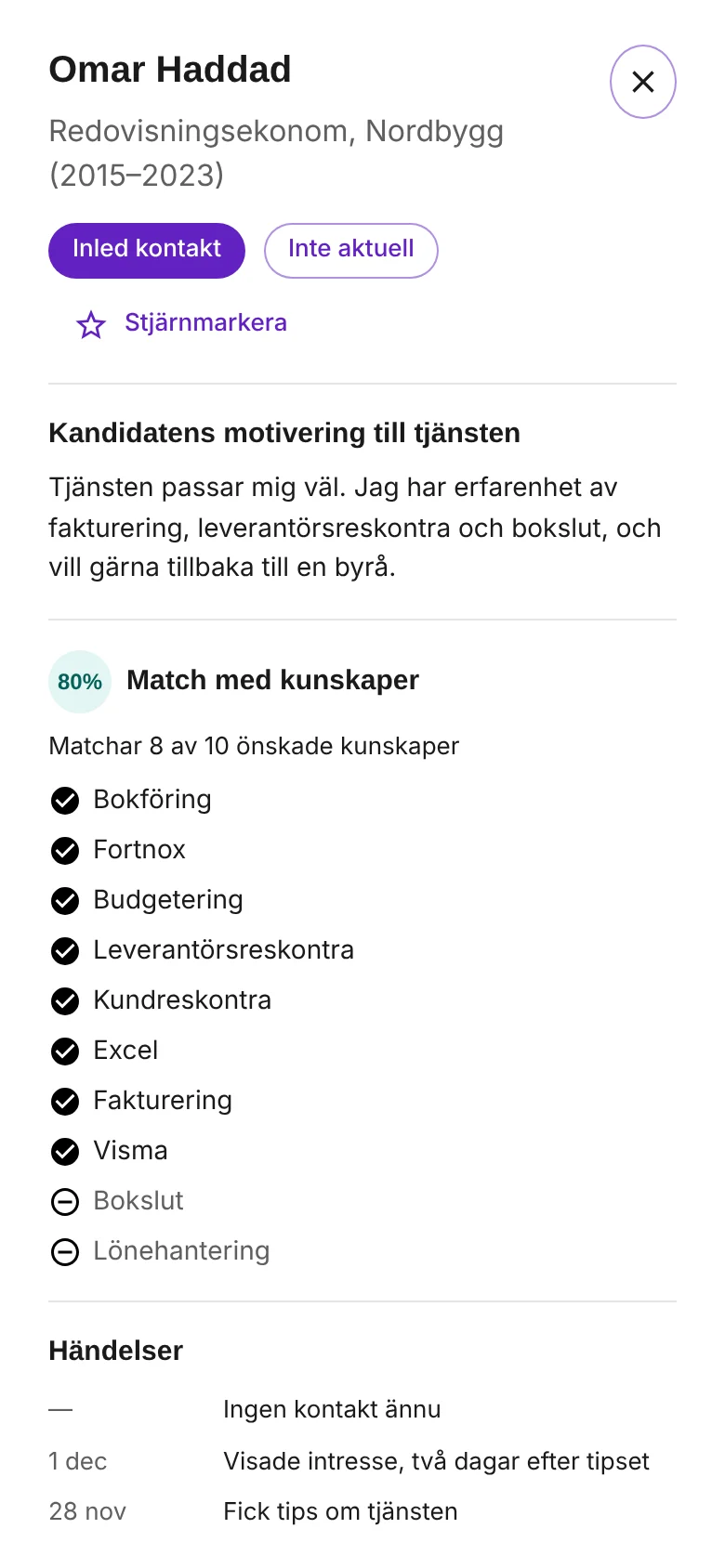
The candidate’s own motivation and which skills match helped recruiters decide whom to contact.
Running recruitment
Being able to publish without an end date supported proactive recruiting, which few other systems allow.
A thank-you that fits
A general thank-you for people they hadn’t spoken to, and personal feedback for the ones they had.
“It does the job for me. I don’t have to look for candidates who are interested myself.”
Recruiter in the concept test
“I like getting a notification when something has happened, so I don’t have to keep checking.”
Recruiter in the concept test
“Every separate system is a small threshold. If it could work with our recruitment system, we’d be a long way there.”
Recruiter in the concept test
Moved to “perhaps later”: a list of candidates
In the concept, the company could see a list of the matching candidates already in step two, before anyone had shown interest.
After the tests we moved it to “perhaps later” in the story map. What companies wanted was to sort out who was really interested, and spend their time there. A list of everyone who might fit brought back the work the service was meant to remove. The first version tells the company that there are matching candidates, not who they are.
What we changed
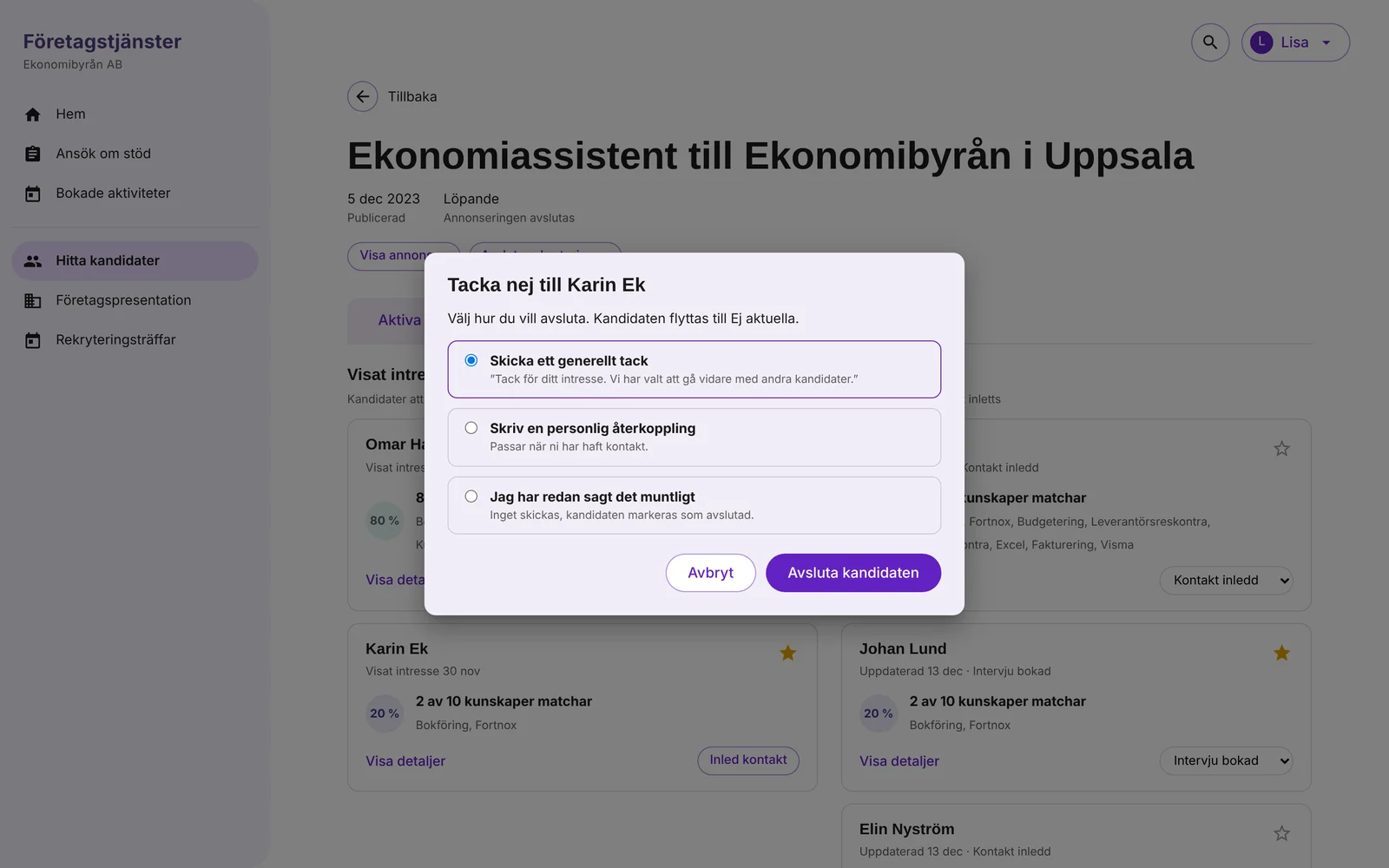
Recruiters wanted contact details early, so they show as soon as someone has shown interest. Saving a candidate was easy to confuse with a step in the process, so it became a star, separate from the phases. And closing a candidate got clear choices: a general thank-you, personal feedback, or already said in person.
Something we didn’t expect
One of the clearest wishes was not a feature in the service. It was to connect it to the recruitment system the company already uses.
Story mapping: what goes first, and what comes next
With the test results in hand, I ran story mapping sessions with the team. We laid out the journey for both sides, placed everything we had learned under each step, and drew the line for the first version: the smallest whole service that lets a company go from need to contact, and lets a job seeker say yes.
How we drew the line
The first version had to work end to end for both sides. Everything that made it faster or nicer, but not possible, went into “next”.
The story map, redrawn for this case. Activities run across for both sides, and each row is a release.
The solution
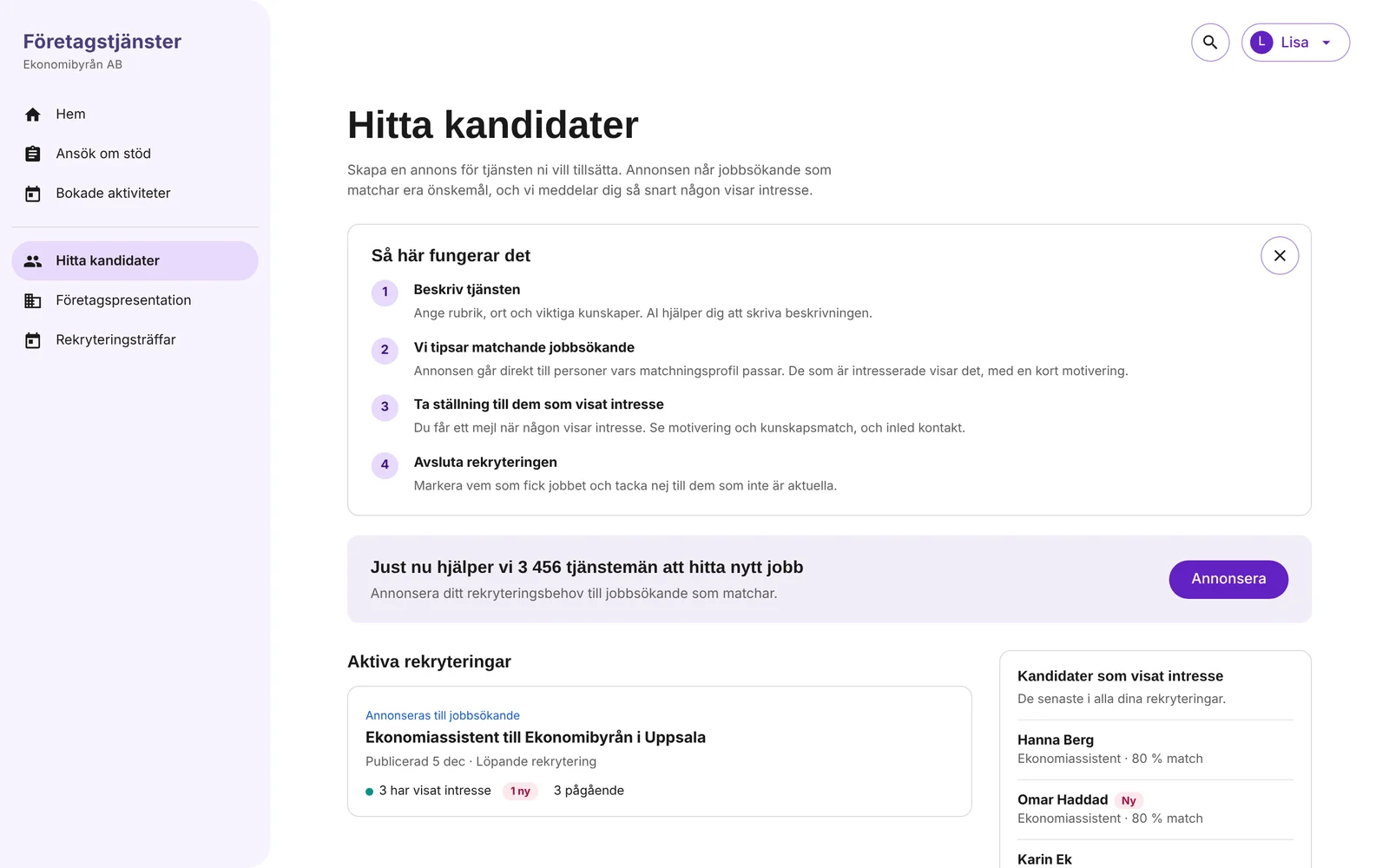
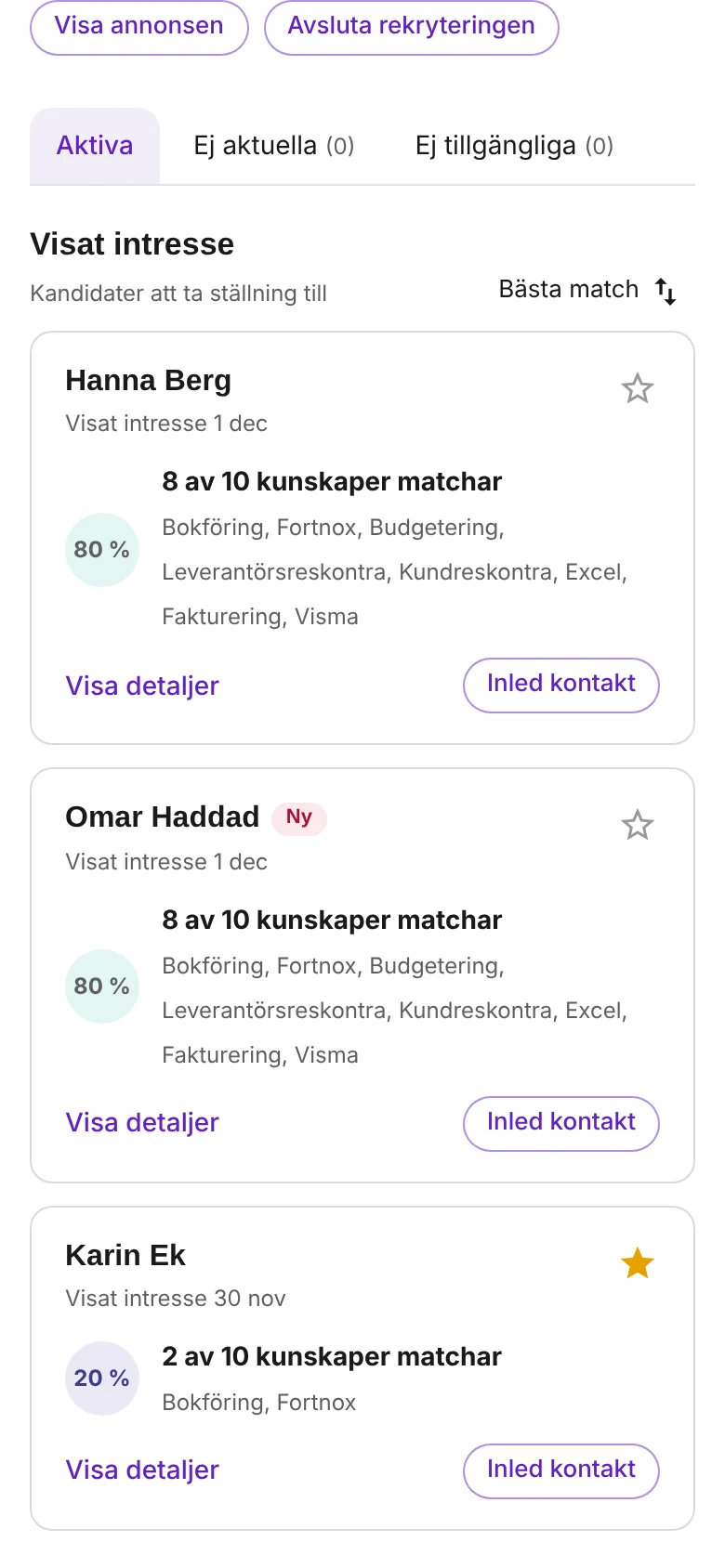
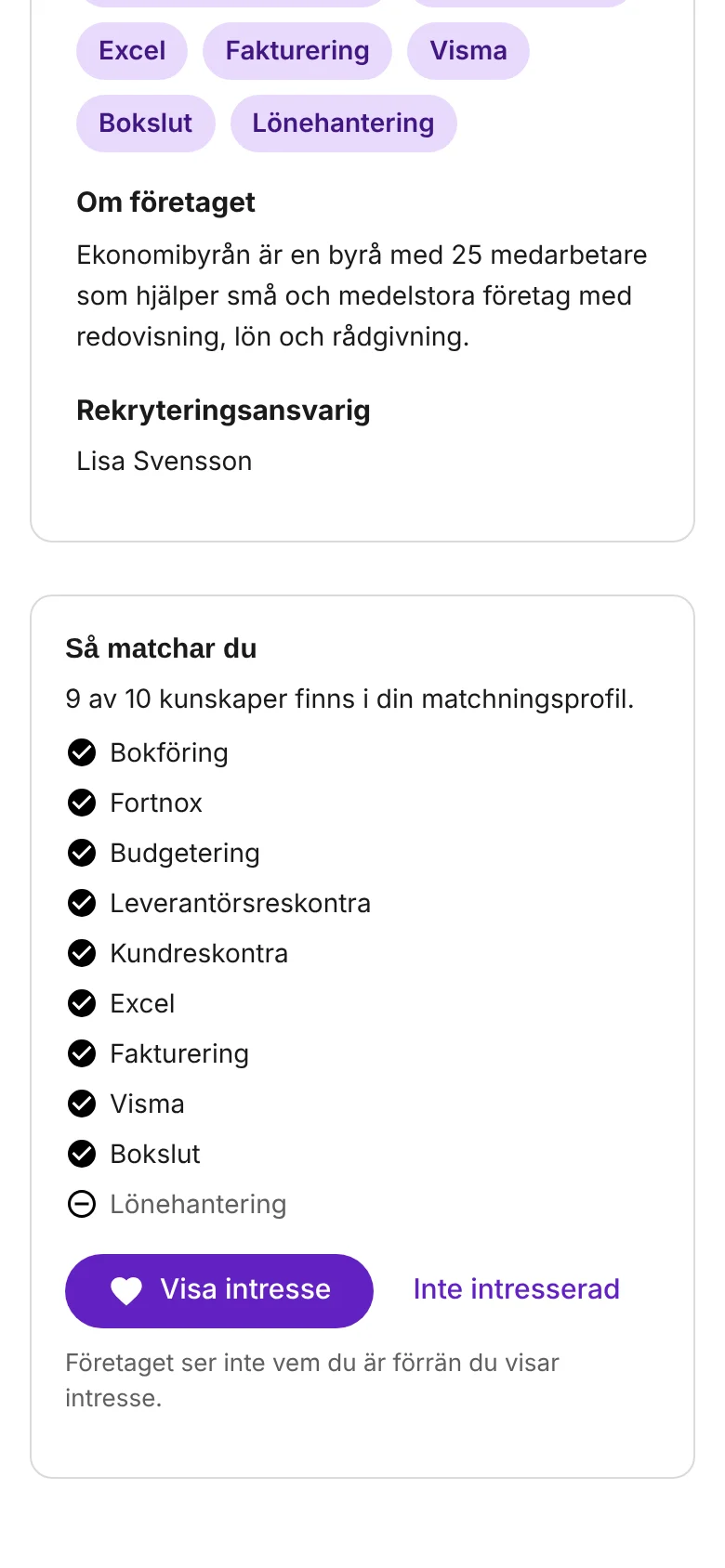
The screens are in Swedish, from a working prototype of the final design, including what came after the first version. Click an image to enlarge it.
Working prototypeTry it yourselfDescribe a hiring need with AI help, review the people who showed interest, then switch to the job seeker and show interest yourself. In Swedish, on desktop or mobile.The company describes the need
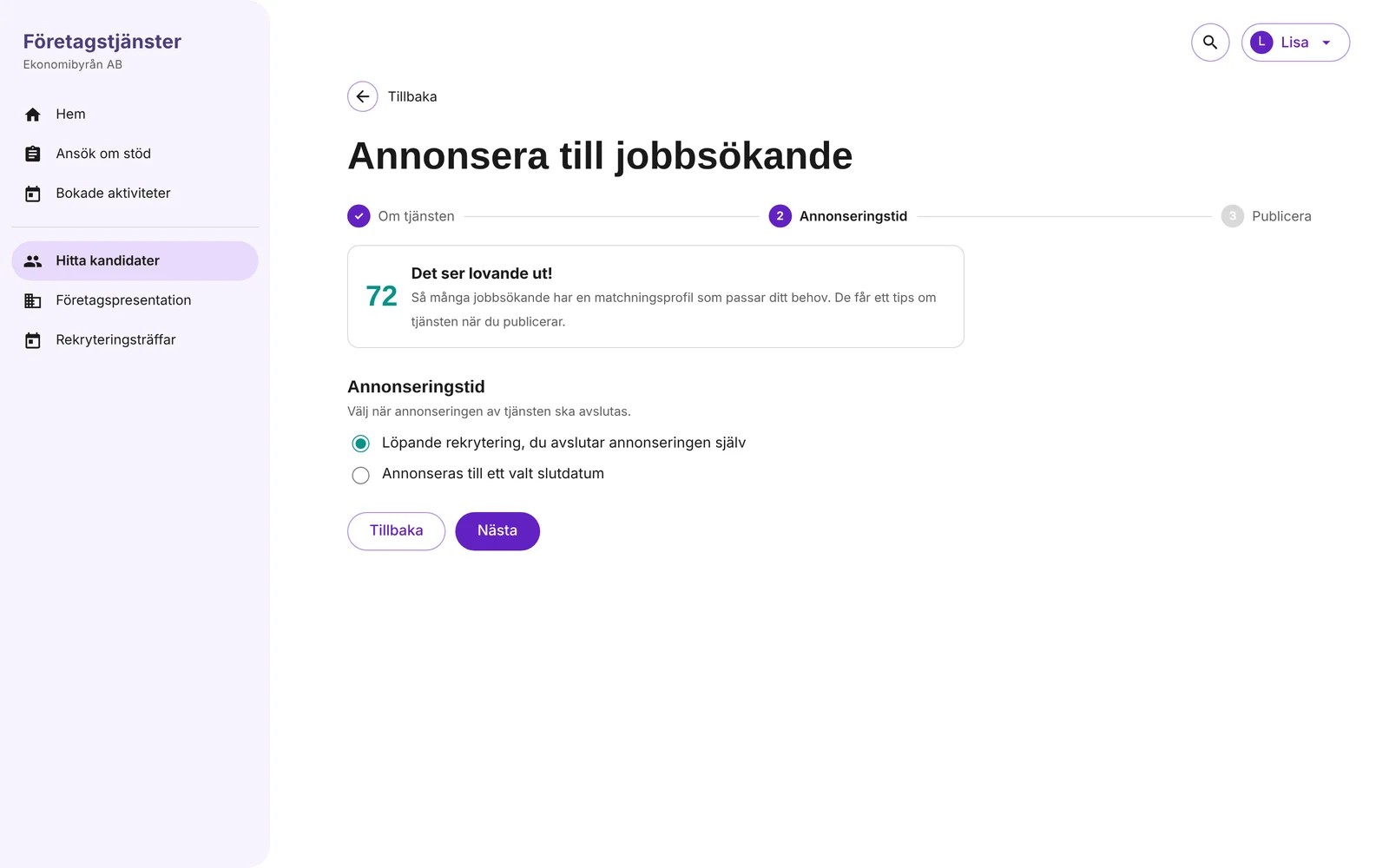
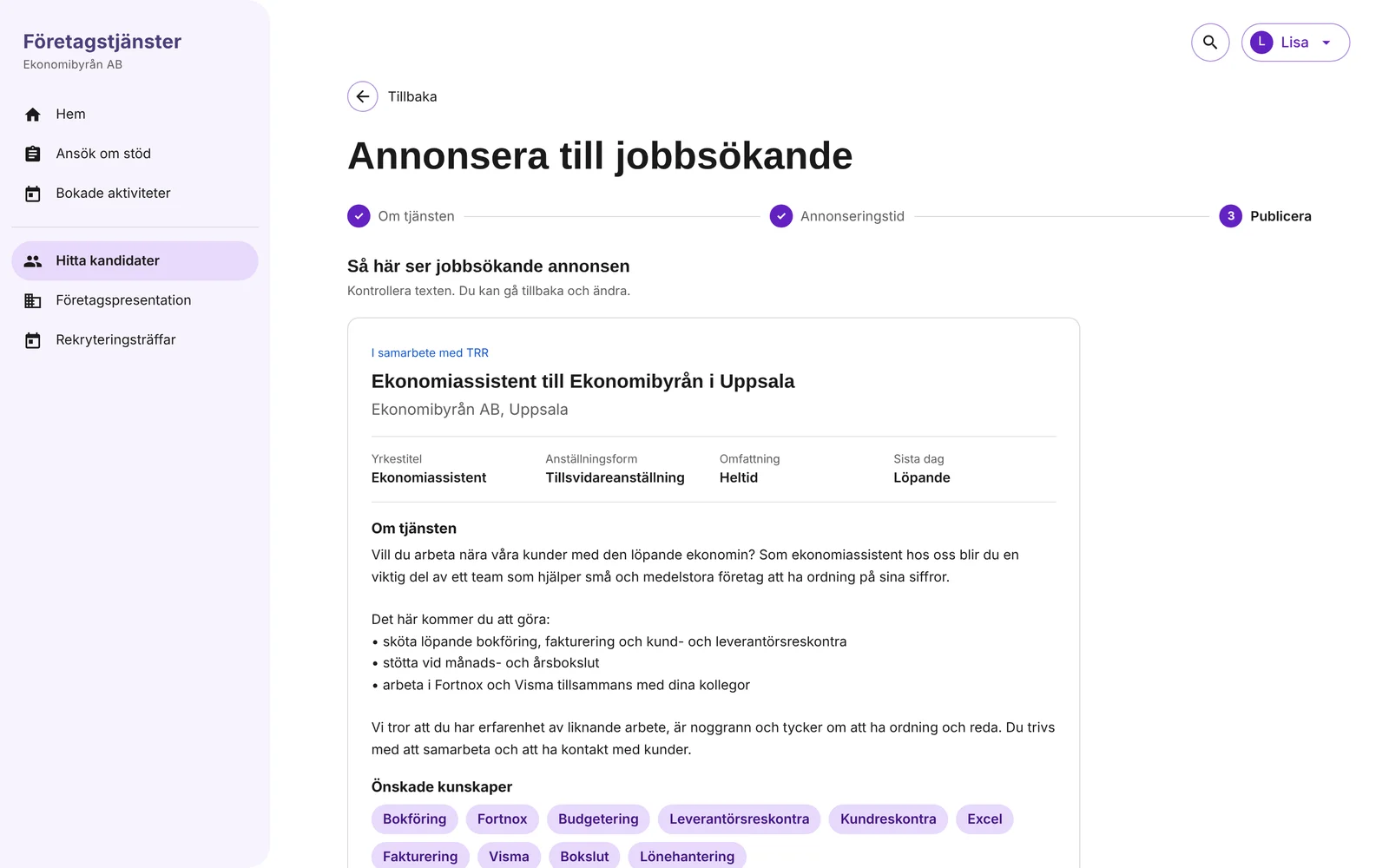
The job seeker finds the role
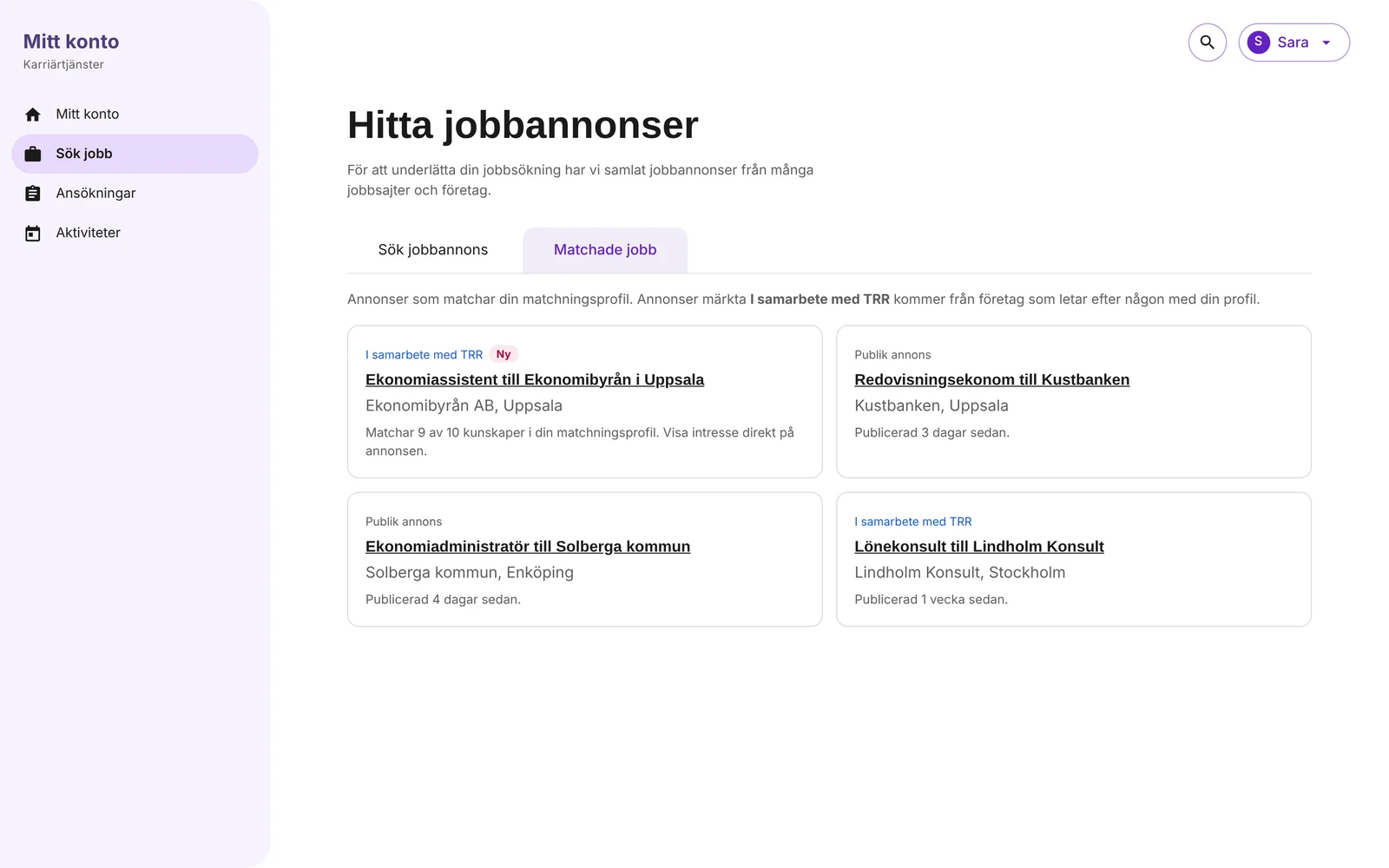
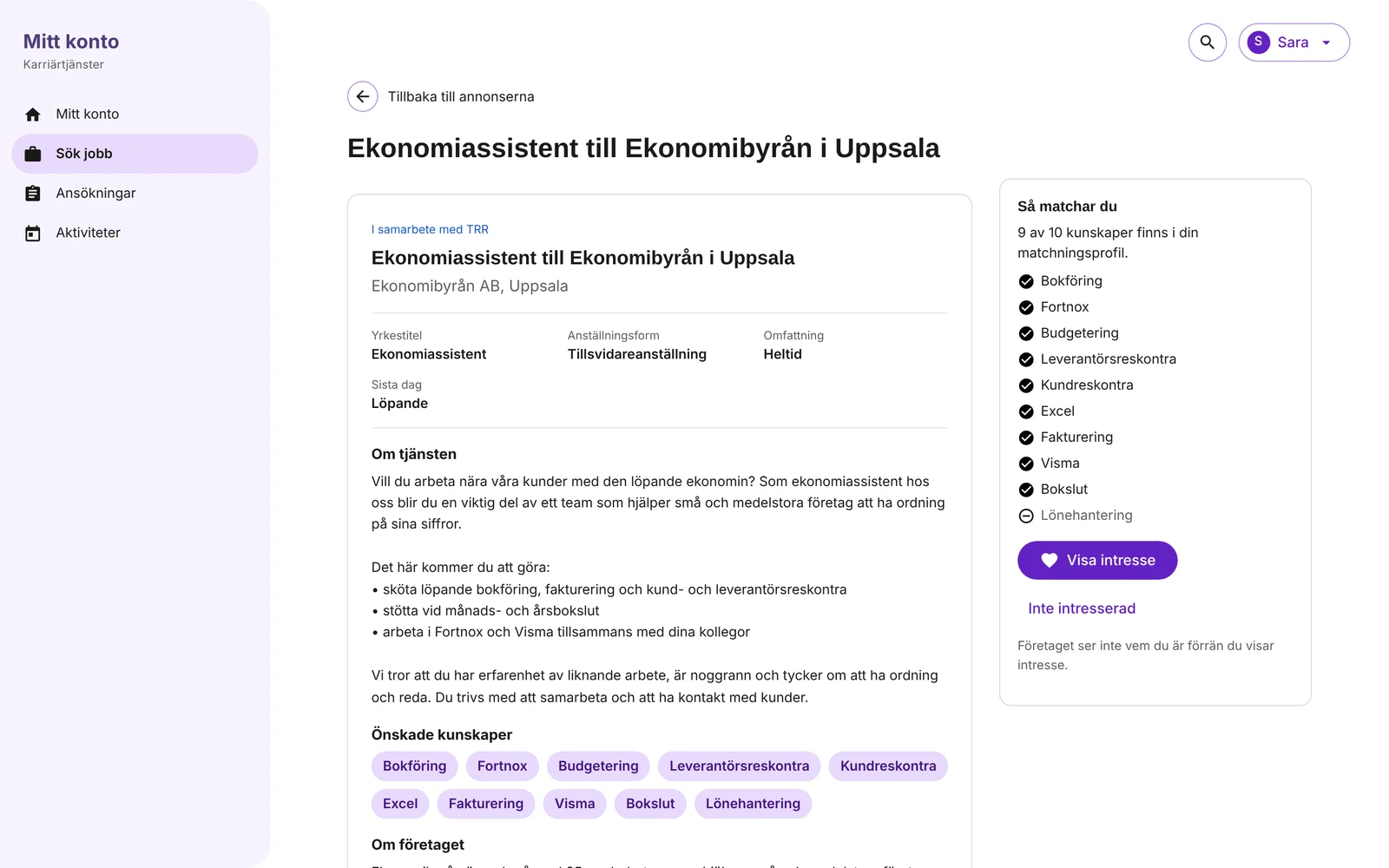
The company meets the interested ones
On mobile
Launch, and what we learned
Where it landed
- The service was built and launched: a totally new way for companies to reach the people TRR helps.
- The concept was tested with companies and job seekers before anything was built, and changed by what we learned.
- The first version was scoped with the team in story mapping, with a clear “next”.
What happened after launch
Companies really saw the potential in the service. But when they had a hiring need, they often forgot to use it. They went back to what they always did: their own recruitment system, or a call to TRR.
The signal was there in the test
Recruiters had told us that every separate system is a threshold. A service people like still has to be where they are when the need comes up.
What I took with me
Liking a service and remembering it are two different things. We tested whether companies understood and valued the service, and they did. We tested less whether it would come to mind on the day a hiring need appears.
Interest first was the right call for both sides. It kept the people TRR helps in control, and it gave companies what they asked for most: candidates who already want the job.