UX/UI Design · Product design · TRR · Sole designer in the product team, 2022–2024
Helping more people in career transition get to a first interview, with everything in Sök jobb working as one
From 2022 to 2024 I was the only designer in the product development team responsible for Sök jobb, the part of TRR that helps people find a new job. The match profile is the foundation: what people enter there decides which job ads they are matched with, and which candidates TRR’s advisors can suggest to employers. Around it I designed the collection page with guides and tools, the matched job ads, clearer ads with new filters, AI support that makes it easier to apply, and the tool advisors use to find candidates. This case shows how the parts work together. Each part has its own case.
- My role
- Sole designer in the product development team
- Years
- 2022–2024
- Users
- People in career transition, and TRR’s advisors
- Company
- TRR
- Area
- Sök jobb: guides, tools, matching, job ads and AI support
- Platform
- Web, desktop and mobile
- Tools
- Figma
The short version
The problem
The parts depended on each other. Support was hard to find, few people had a match profile, ads were hard to use, and advisors struggled to find candidates.
What I did
As the only designer in the team, I designed each part from research to development-ready design, on the same match profile and the same patterns.
What changed
The share of users with a match profile rose from 30 to 50 percent, and with more current profiles, job seekers and employers had a better chance of finding each other.
The problem
Helping someone into a new job at TRR is a chain: find the support, describe what you are looking for, find the right ads, apply well, or be suggested to an employer by an advisor. When one link is weak, fewer people get to an interview.
Support that stayed hidden
Each kind of support had its own entry in the navigation, so people couldn’t see what help they could get.
Few had a match profile
Many didn’t know the match profile existed or found the criteria hard, and profiles were rarely updated. Matching was weaker as a result.
Hard to find, read and apply
Job ads were a dense list, the ads long blocks of text, and applying well took a lot of work. Advisors, for their part, needed expert knowledge to find candidates.
The goal
More people in career transition getting to a first interview, whether they find the job themselves or an advisor suggests them to an employer.
How the parts connect
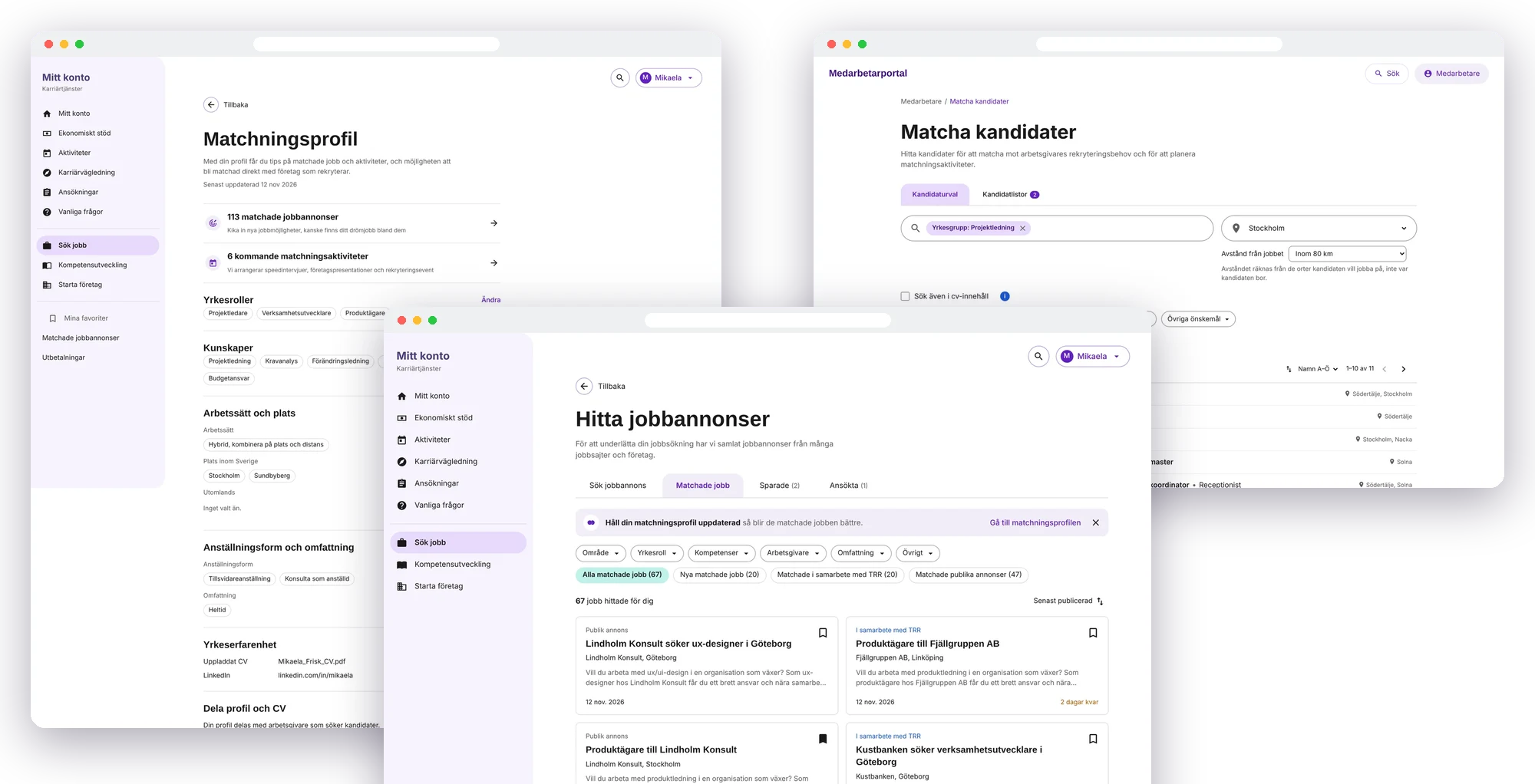
The collection page is the way in. The match profile sits in the middle: what people enter there feeds two sides, the job seeker’s own search and the advisors who suggest candidates to employers. The filter standard runs underneath both.
Job seekers
Advisors and employers
Each box links to the case where that part is told in full.
My role: the only designer for Sök jobb
The only designer in the team
From 2022 to 2024 I was the only designer in the product development team responsible for Sök jobb, working with the product owner and the developers. I led the design and did the work myself: research, concepts, prototypes, user tests and development-ready design, and I supported the developers while they built it.
A method for each part
A/B user tests for the collection page. Interviews, surveys and behavioural data for the match profile. Prototype tests with advisors for the candidate search. Design sprints with the whole team for the AI services, and usability tests of the whole job ads flow.
Together with other designers
Two things reached beyond the team. The filter I designed together with designers from other product teams, so it could become one standard across TRR’s services. The collection page I aligned with the designers of the other areas, so all collection pages work as one.
The parts
Each part solved its own problem, and each has its own case. Here is what each one did, and what it led to.
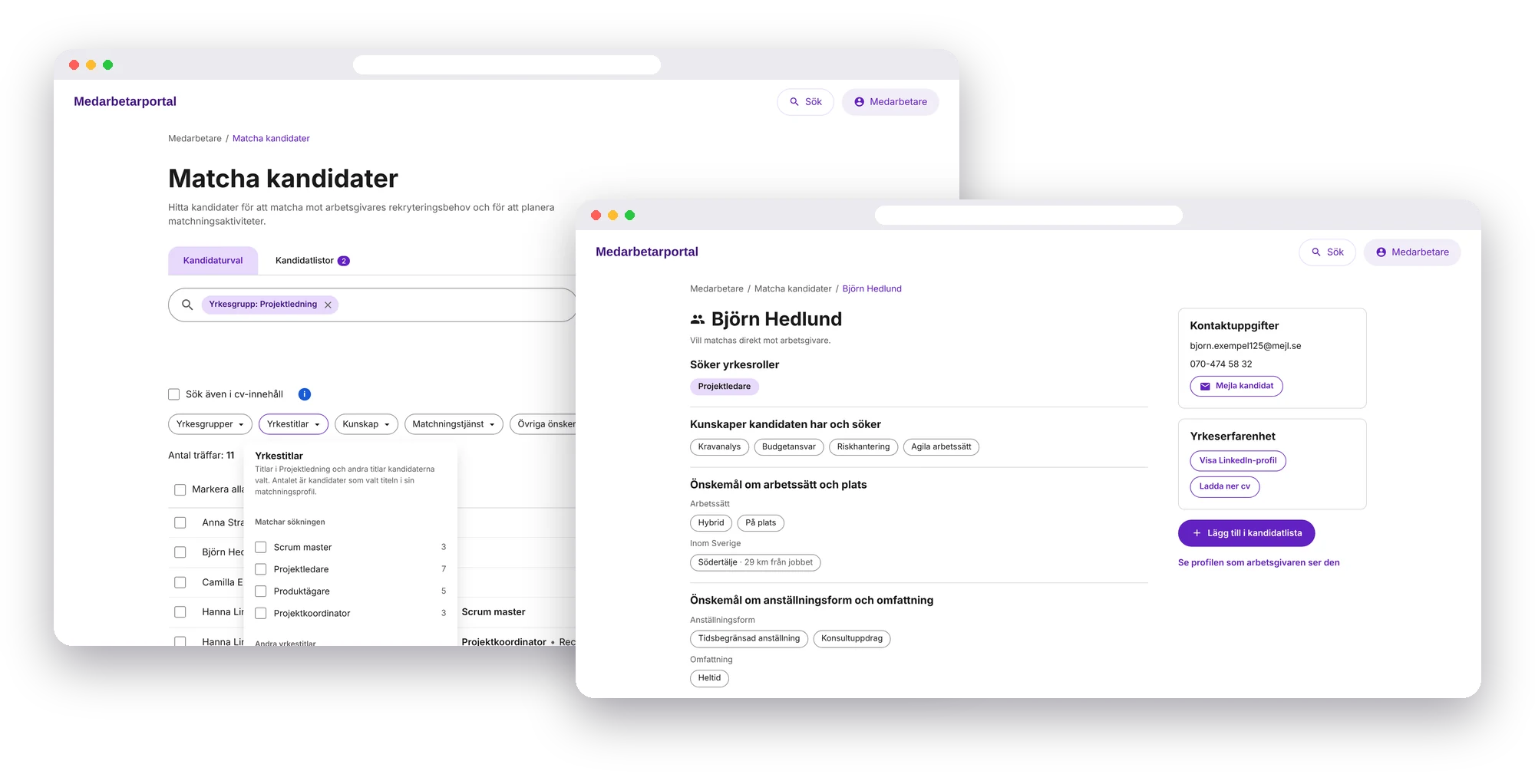
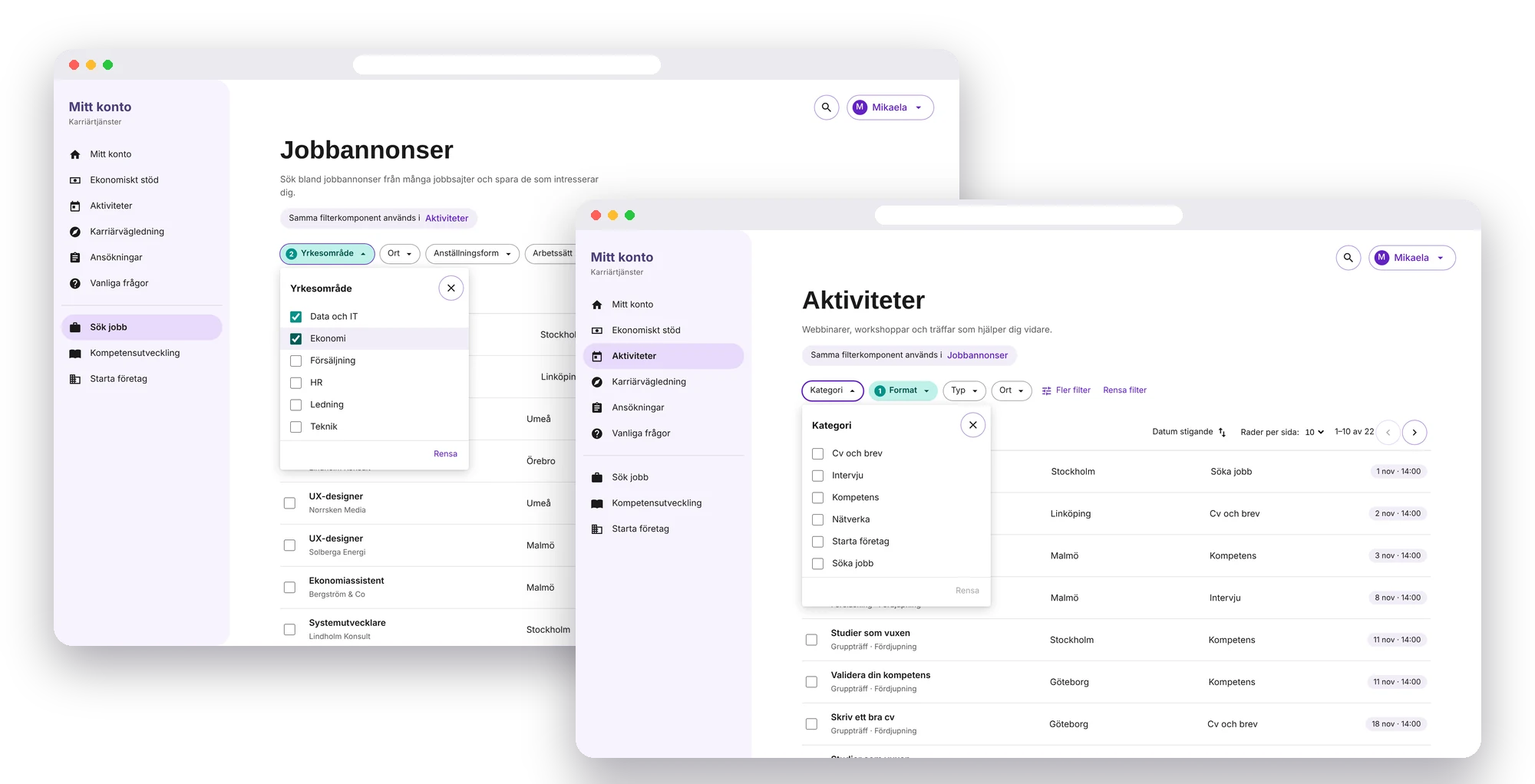
What ties it together
One profile, used everywhere
What people enter once in the match profile decides their matched jobs, the suggestions in the search field, what the AI compares their CV with, and whether advisors can find them.
One way to filter
Job seekers and advisors narrow down with the same filter component from TRR’s design system, so the pattern is learned once.
One direction
Every part points the same way: more people in career transition in contact with employers, and on to a first interview.
The results
The results belong to each part, and are told in full in each case.
Sök jobb collection page
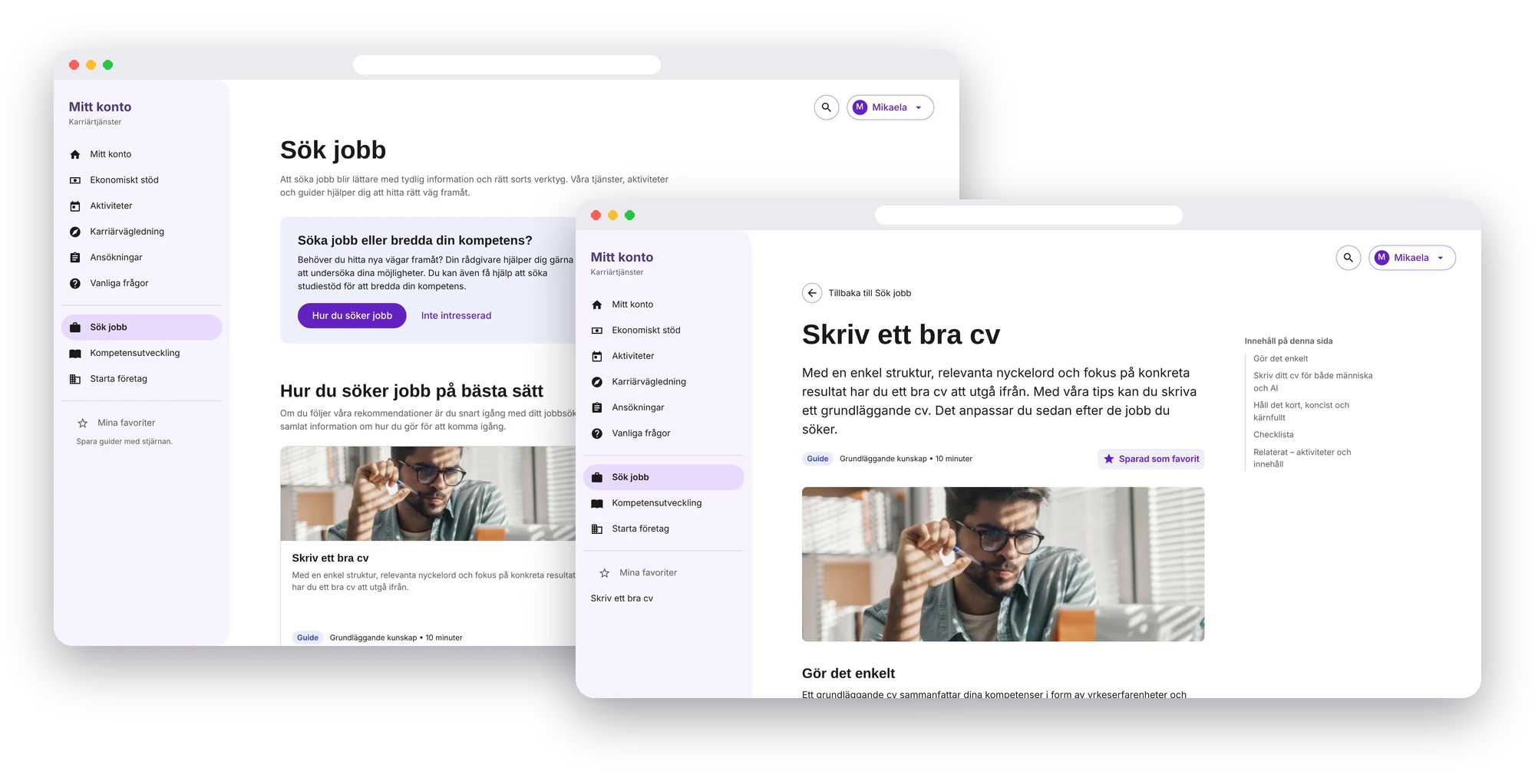
In A/B user tests, people found useful help more easily and understood better how the support fitted together.
Match profile
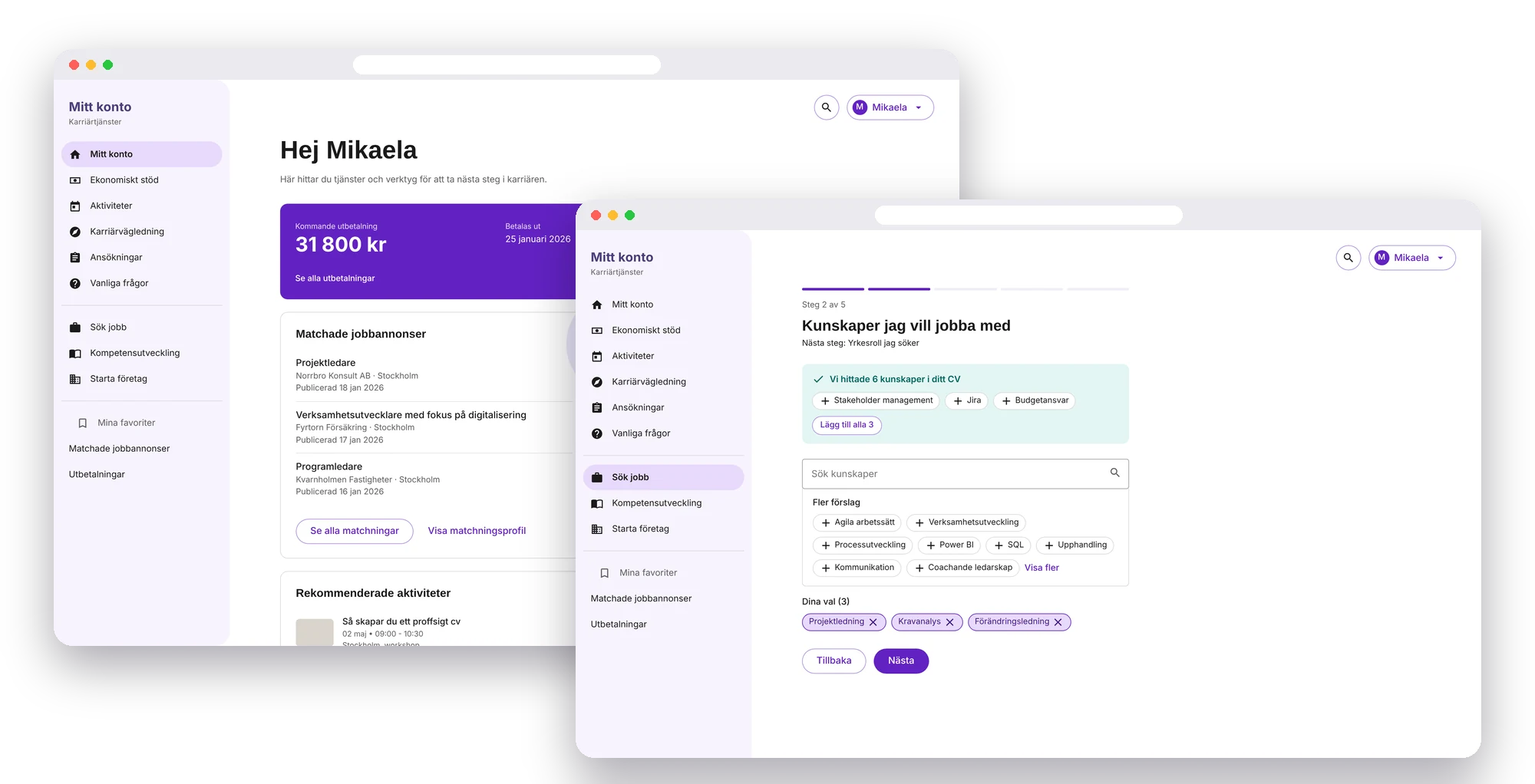
The share of users with a match profile rose from 30 to 50 percent, and complete profiles from 80 to 93 percent. More jobs were matched when the matching was widened to adjacent matches.
Job ads, filters and AI support
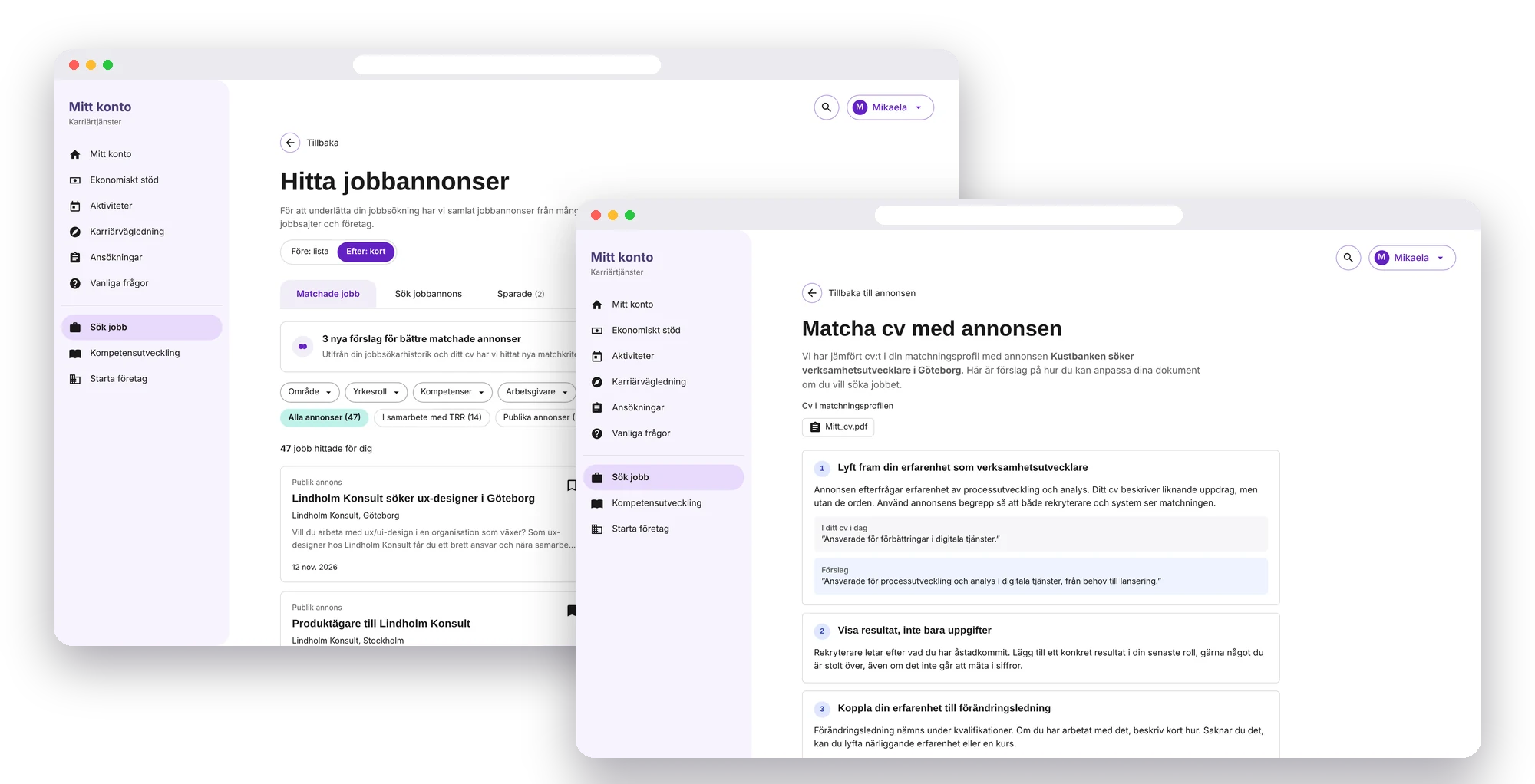
The cards, filters, clearer ads and both AI services were launched step by step, and the whole flow was tested with users.
Match candidates
The advisors confirmed all three hypotheses: start broad, choose by distance, and enough information on each row to choose. The test also showed what to remove before anything was built.
Filter standard
One documented component in TRR’s design system instead of many local versions.
What I took with me
The biggest effect rarely comes from one feature. At TRR it came from improving the whole chain, from finding the support to the interview people hope to get.
Working across the whole area meant each part could build on the others. The job ads and the candidate search both use what people enter in their match profile, and the same filter.